Showing Posts From
Budget-travel
-
 Lulu the pug
 - March 2, 2026
Albania in 2026: The Riviera Before Everyone Else Gets There
Albania's Riviera coast has the same limestone cliffs and Ionian water as the Greek islands across the channel — you can literally see Corfu from Ksamil — at about a third of the price. Bookings for Albania surged 300% in recent years, search volume is up hundreds of percent across every major travel platform, and prices in tourist areas rose 12–20% in 2025 alone — and it's still substantially cheaper than anywhere comparable in the Mediterranean.## Table of contents## Getting There**From Western Europe:** Tirana's Mother Teresa International Airport (TIA) has direct connections from most major European cities — London, Rome, Vienna, Amsterdam, Istanbul, and others. Budget carriers including Wizz Air and Ryanair cover the main routes. Return flights from Western Europe typically run €80–180 if you book a few weeks out.**From Corfu (the easy Riviera entry):** If you're already in Greece, the ferry from Corfu to Saranda takes 30–90 minutes depending on the vessel and costs €19–30. Two companies run the route: [Finikas Lines](https://www.finikas-lines.com) and [Ionian Seaways](https://www.ionianseaways.com). The fast catamaran does it in 30 minutes; the regular ferry is closer to 70–90. Either way, you step off in Saranda and you're on the Riviera immediately.**Overland from neighboring countries:** Buses connect Tirana with Skopje, Podgorica, and Thessaloniki. The journey from Skopje takes around 5–6 hours and costs €15–25. From Podgorica (Montenegro) it's about 4 hours.**From Tirana to the Riviera:** Once in Albania, Tirana to Saranda takes 4–5 hours by bus (around 1,000–1,500 ALL, roughly €10–15). If you're driving, the route via the SH8 national road hugs the coast for the final stretch and is worth doing in daylight.| Route | Method | Cost | Time | |---|---|---|---| | London → Tirana (return) | Budget airline | €80–180 | ~3 hrs | | Corfu → Saranda | Ferry | €19–30 | 30–90 min | | Tirana → Saranda | Bus | €10–15 | 4–5 hrs | | Saranda → Ksamil | Local bus | €1 | 20 min |## Where to Base Yourself### SarandaSaranda is the main town on the Riviera — it has a proper promenade, ATMs, restaurants, a decent selection of accommodation, and good transport connections to Butrint, Ksamil, and Gjirokastra. It's not a beautiful town. The seafront is pleasant; the back streets are construction and concrete. But as a base it's practical.### KsamilKsamil is 12km south of Saranda and is the place most people mean when they picture the Albanian Riviera. Four small islands sit just offshore and the water between them is clear in a way that justifies the photos. It's small, it fills up in July and August, and prices here are higher than anywhere else on the Riviera — beach clubs charge €15–35 for two sunbeds and an umbrella. But the beaches are the best in the country.If you want to be somewhere that looks like the photos, stay in Ksamil. If you want cheaper accommodation and easier logistics, base in Saranda and day-trip.### HimaraAbout 90km north of Saranda on the coast road, Himara sits between the two and has a slightly different feel — more of a working town, less given over to tourism, with its own decent beaches. Worth a stop if you're driving the coast rather than a base in itself.| Location | Hostel dorm | Budget private room | Mid-range hotel | |---|---|---|---| | Tirana | €10–16 | €30–45 | €55–80 | | Saranda | €12–20 | €35–55 | €60–90 | | Ksamil (peak summer) | €15–25 | €45–80 | €90–150 | | Ksamil (June/Sept) | €10–18 | €30–50 | €50–80 | | Himara | €10–15 | €25–40 | €45–70 |Prices roughly double in Ksamil between June and July. Book ahead if you're going in peak summer or you'll pay hotel prices for a room that isn't worth it.## What Albania CostsAlbania has gotten more expensive. Prices in tourist areas rose 12–20% in 2025 alone, and the Riviera sees the steepest increases. It's still cheap by Western European standards — but it's no longer the "pay almost nothing" destination it was three or four years ago.### Daily budget estimate| Traveler type | Daily budget | What it covers | |---|---|---| | Budget | €25–40 | Hostel dorm, street food and simple restaurants, public transport | | Mid-range | €55–90 | Private room in a guesthouse, sit-down meals, a day-trip or activity | | Comfortable | €100–150 | Nice hotel, seafood dinners, car rental |The Albanian lek (ALL) is the local currency. 1 EUR ≈ 100 ALL. ATMs dispense lek; cards work in larger restaurants and hotels but not reliably everywhere.## The Riviera### Ksamil BeachThe main draw. The water is shallow, warm, and clear in a way that photographs accurately for once. The small islands (three of them reachable by a short swim or paddleboard) give the place its distinctive look. Beach clubs have taken over most of the prime spots — you'll pay €15–35 for two sunbeds and an umbrella in peak season. Free beach access still exists but it takes some walking to find it. Go early to claim a spot.### Gjipe BeachAbout 20km north of Himara, Gjipe sits at the mouth of a canyon where a gorge meets the sea. Getting there requires either a 45-minute hike down a canyon trail (starting from a parking area off the main road) or a water taxi from Himara. There are no facilities. The water is cold and clear. It's worth the effort if you're renting a car or willing to figure out the boat.### Mirror Beach (Pasqyra)Near Himara, accessible by a short hike or water taxi from the main beach. Smaller and harder to get to than Ksamil, which keeps the crowds down. No beach clubs, no sunbed rental. Bring your own water.### Porto PalermoNot primarily a swimming beach but worth stopping for the Ottoman-era Ali Pasha castle on a small peninsula. Free to visit, and the castle itself is in decent condition. About an hour north of Saranda by car.## Beyond the Beach### GjirokastraA two-hour drive from Saranda, Gjirokastra is a UNESCO-listed Ottoman town built into a steep hillside. The old bazaar, the stone houses with their distinctive slate roofs, and the fortress at the top are all worth the trip. It's also the birthplace of Enver Hoxha (the communist dictator who ran Albania from 1944 to 1985) and Ismail Kadare, Albania's best-known novelist — two very different people to come from the same city.The castle entry is around 500 ALL (€5). Inside is a collection of captured military aircraft and weapons, plus views over the whole valley. Allow half a day for the old town and fortress.**How far:** 2 hours by car from Saranda, or about 3 hours by furgon (with a change). A day trip from Saranda is doable.### Butrint National ParkA UNESCO site 18km south of Saranda, Butrint contains remarkably preserved ruins from Greek, Roman, Byzantine, and Venetian periods layered on top of each other in a forested peninsula. Entry is around €10–12 for the national park (check current rates — they've been adjusted in recent years). The bus from Saranda runs hourly and costs 150 ALL (€1.50). Budget 3–4 hours to walk it properly.Worth doing? Yes. It's one of the better archaeological sites in the Balkans and the setting — forest, lagoon, ruins stacked across different civilizations — is distinct from what you find at most comparable sites in the region. Check [Butrint National Park's official site](https://butrint.al) for current entry fees and opening hours.### Blue Eye (Syri i Kaltër)A freshwater spring 24km from Saranda where water wells up from an underground river through a deep circular pool. The water temperature is around 10°C year-round. The color is a deep, almost electric blue. Entry is 50 ALL (€0.50), parking around 100–200 ALL. Getting there: shared taxi from Saranda for around €5–8 each way, or a tour. There's no direct bus. Most people combine Blue Eye with a Gjirokastra day trip.| Attraction | Entry cost | Distance from Saranda | |---|---|---| | Butrint National Park | ~€10–12 | 18km, 30 min | | Gjirokastra Castle | ~500 ALL (€5) | 90km, 2 hrs | | Blue Eye Spring | 50 ALL (€0.50) | 24km, 30 min | | Porto Palermo Castle | Free | 60km, 1 hr |## Food CostsAlbanian food is worth eating. It's not as immediately photogenic or talked-about as Greek or Turkish cuisine, but the ingredients are good — the lamb, the yogurt-based sauces, the fresh fish on the coast.**Byrek** is the everyday fast food: layers of flaky pastry filled with cheese, spinach, or meat. You'll find it at bakeries everywhere for 50–100 ALL (€0.50–1). Eat it for breakfast, eat it as a snack.**Tavë kosi** is the dish most people point to as distinctly Albanian — lamb baked in a yogurt and egg sauce. It costs €5–8 at a local restaurant and is worth ordering at least once.**Seafood on the Riviera:** Grilled fish and calamari are good and noticeably cheaper than Greece. A grilled sea bream runs €8–12 at a mid-range restaurant. Mussels and clams are plentiful around Ksamil.| Meal | Cost | |---|---| | Byrek from a bakery | 50–100 ALL (€0.50–1) | | Budget lunch at a local place | 500–700 ALL (€5–7) | | Tavë kosi at a sit-down restaurant | 600–800 ALL (€6–8) | | Grilled fish (sea bream or sea bass) | 800–1,200 ALL (€8–12) | | Dinner for two with wine and starters | €25–45 | | Espresso | 50–80 ALL (€0.50–0.80) |Stick to restaurants a street or two back from the beachfront and you'll pay noticeably less for the same food. The 50m premium is real.## Getting Around**Furgons** are the main public transport option — shared minibuses that depart when full rather than on a fixed schedule. They connect most towns and are very cheap. The catch: no timetable online, no app, ask locally when you arrive. Departure times shift seasonally. The Saranda to Gjirokastra furgon costs around 300–400 ALL (€3–4).**Long-distance buses** connect Tirana with Saranda, Gjirokastra, Vlora, and other major towns. More comfortable than furgons, slightly more expensive, and they do keep rough schedules.**Renting a car** is the best way to see the Riviera properly. It lets you stop at beaches that have no public transport, drive the coastal road at your own pace, and combine Gjirokastra and Blue Eye in a single day. Economy rentals run €20–35/day outside peak season, €35–60/day in July–August. Fuel is reasonably priced. Insurance: take the full coverage — road conditions vary, and local driving habits can be assertive.A note on driving: Albanian roads range from good (highways between major cities) to rough (secondary mountain and coastal roads). The coastal SH8 road has sections that require slow, careful driving. Not dangerous, but not autopilot motorway either. A standard sedan handles most of the Riviera routes fine; you only need a 4WD for more remote mountain areas.| Transport | Route | Cost | |---|---|---| | Furgon | Saranda → Ksamil | 100 ALL (€1) | | Furgon | Saranda → Gjirokastra | 300–400 ALL (€3–4) | | Bus | Tirana → Saranda | 1,000–1,500 ALL (€10–15) | | Car rental | Per day (low season) | €20–35 | | Car rental | Per day (July–Aug) | €35–60 | | Ferry | Corfu → Saranda | €19–30 |## A 7-Day Albania ItineraryThis is a reasonable pace that covers the main things without rushing.### Day 1–2: TiranaArrive in Tirana, recover, eat. The capital has improved a lot — the Blloku neighborhood, formerly the Communist Party's exclusive residential zone, is now full of cafes and restaurants. The National History Museum has a giant Soviet-style mosaic on its facade that tells you something about Albania's recent past. Wander, eat byrek, sleep cheaply. Tirana is better than it's given credit for but two days is the right amount.### Day 3: Travel to GjirokastraTake an early bus or furgon south to Gjirokastra (4 hours from Tirana). Check in to a guesthouse in the old town — staying in the old bazaar is worth it here, not a tourist trap. Spend the afternoon walking the stone streets and the evening eating at a local restaurant. Gjirokastra has good lamb.### Day 4: Gjirokastra + Blue EyeMorning: Gjirokastra Castle and the Cold War Tunnel beneath the bazaar. Afternoon: rent a car or share a taxi to Blue Eye spring (30 minutes away). Back to Gjirokastra for the night, or drive to Saranda (2 hours).### Day 5: Saranda + ButrintArrive in Saranda (if you didn't get there the night before). Morning: walk the promenade and eat breakfast. Afternoon: bus to Butrint (30 minutes, 150 ALL). Spend 3–4 hours at the ruins. Back to Saranda for dinner.### Day 6: KsamilBus or taxi to Ksamil (20 minutes). Spend the day at the beach. Swim out to the nearest island if you want to. Sunbed rental in peak season or find the free beach section. Eat seafood. This is the day with no agenda.### Day 7: FlexibleIf you entered via Corfu, the ferry back takes 30 minutes. If you're flying from Tirana, the bus back takes 4–5 hours — take the early morning departure. Alternatively: use the day for Gjipe Beach (rent a car or take a water taxi from Himara, a stop on the way north).## VisaMost of the nationalities likely to be reading this don't need a visa for Albania.- **US citizens:** Up to 365 days visa-free, no permit required - **EU/Schengen citizens:** Visa-free, can use national ID card or passport - **UK citizens:** 90 days visa-free, passport required (not just an ID card) - **Canada, Australia, and most other Western countries:** 90 days visa-freeAlbania is not in the EU or Schengen Area, which means a trip to Albania doesn't consume any of your 90/180-day Schengen allowance. It's a clean entry and exit.Your passport needs at least 3 months of remaining validity. Verify current requirements at the [Albanian Ministry of Foreign Affairs website](https://www.punetejashtme.gov.al) before traveling — visa policy can shift.## Best Time to Go**For the Riviera:** June and September. The water is warm, the beaches are not at maximum capacity, and accommodation is meaningfully cheaper than peak summer. Late June specifically is a good window — school holidays haven't started across most of Europe, and the weather is reliably warm.**July and August:** Hot (35°C+), crowded, and expensive. Ksamil in particular gets overrun. If peak summer is your only option, book accommodation early and expect beach clubs to be full by 10am.**For Gjirokastra and Tirana:** May and October are ideal. Mild temperatures, almost no crowds, and the old cities are more enjoyable without heat making every uphill section a slog.**Avoid** visiting the Riviera coast before May — many restaurants and accommodation options in Ksamil don't open until late April or May.## One Thing That's Annoying**Cash dependency.** This is the real friction point that other guides tend to understate. Albania's card infrastructure is patchy outside Tirana and major hotels. Furgons are cash only. Many beach restaurants are cash only. Market stalls, local bakeries, and smaller accommodation — all cash. ATMs exist in Saranda and Ksamil town, but not at beaches or on the road between towns.The practical consequence: you need to plan your cash withdrawals. Run out on a beach day and you're eating at wherever happens to accept a card, which narrows your options considerably. Withdraw more than you think you'll need when you pass an ATM in a town. The fee for an ATM withdrawal is typically 200–300 ALL (€2–3) — annoying but not ruinous.The secondary issue: Albanian lek is not a convertible currency. You can't buy it before you arrive (or sell it afterward). Get it from an ATM in Albania.## FAQ**Is Albania safe?**Yes. Violent crime targeting tourists is rare. The safety concern people actually encounter is driving — Albanian road culture involves frequent overtaking on blind bends, pedestrians sharing narrow roads with fast-moving vehicles, and general assertiveness at intersections. If you're renting a car, drive defensively. If you're walking along rural roads, face traffic. Petty theft happens (don't leave things visible in a parked car) but it's not a pressing concern in the way it is in some cities further west.**Do I need a visa?**US, UK, and EU citizens all enter visa-free. Americans get up to a year; UK and most others get 90 days. Albania is outside Schengen so it doesn't affect your Schengen time. Full details in the Visa section above.**When's the best time to visit the Riviera?**June and September. Good weather, lower prices, fewer crowds than peak summer. May works if you don't mind slightly cooler water.**How do I get there?**Fly to Tirana (direct from most European cities), then bus or drive south to the Riviera. Or fly to Corfu and take the 30-minute ferry to Saranda — this is the easier entry if you're coming from the south or combining with Greek islands.**Is English widely spoken?**In tourist areas: yes, especially among younger Albanians. Italian is also widely understood. Outside the main tourist zones it drops off, but you'll get by with a translation app and some goodwill.**How does it compare to Greece for cost?**Albania runs roughly 40–60% cheaper than Greece for comparable experiences. A beach day in Ksamil costs a fraction of what the same day runs in Santorini or Mykonos. The water quality and scenery are comparable on the coast. The food doesn't have the same profile as Greek cuisine, but it's good and cheap. The infrastructure is rougher — roads, bus systems, signage — and that's a fair trade-off to know about going in.---
- Lulu the pug
- March 2, 2026
Azores in 2026: Which Island, What It Costs, and How to Get There
The TikTok videos look like they've been edited. Two lakes sitting inside a volcanic crater, one deep blue and one green, separated by a narrow strip of land. They haven't been edited. That's what Sete Cidades actually looks like, and you can drive to the rim and stand there for free.Search interest in the Azores is up roughly 200% in 2026, driven mostly by those crater lake videos and clips of people sitting in thermal waterfalls. The prices haven't caught up yet.## Table of contents## Getting ThereThe Azores are a Portuguese archipelago sitting in the middle of the Atlantic, about 1,500 km west of Lisbon. For most visitors, the entry point is João Paulo II Airport in Ponta Delgada (PDL) on São Miguel.**From Lisbon:** [TAP Air Portugal](https://www.flytap.com) and [Ryanair](https://www.ryanair.com) both fly the route. The flight is about 1 hour 40 minutes. Book 6-8 weeks out and one-way fares run €40-80 on Ryanair or TAP economy. Last-minute TAP fares hit €120-180.**From London:** [Ryanair](https://www.ryanair.com) flies direct from Stansted to Ponta Delgada in around 3 hours. British Airways connects through Lisbon. Budget roughly £70-150 one way depending on how far out you book; round trips start around £150-200 for off-season travel.**From the US East Coast:** [Azores Airlines](https://www.azoresairlines.pt) (formerly SATA International) runs the most nonstops — roughly 6 per week from Boston, fewer from New York. United and TAP codeshare. The direct flight from Boston is about 4 hours, which makes this one of the shortest transatlantic routes from the East Coast. Round-trip fares from Boston typically run $400-700 in summer; off-season drops to $300-450. From New York prices are similar or slightly higher.**From the airport:** The airport sits about 2 km from the city center. A taxi costs €8-12. If you're picking up a rental car — which you should be — most agencies have desks at or near arrivals.## Which Island to Visit FirstNine islands spread across 600 km of Atlantic. Most first-timers should go to São Miguel and not overthink it.**São Miguel** is the largest island and concentrates the most compelling stuff: Sete Cidades, Furnas geothermal valley, Caldeira Velha thermal waterfall, Lagoa do Fogo crater lake, and the coastal scenery around Nordeste. Ponta Delgada has decent restaurants, a walkable old town, and a range of accommodation. Four to five days here is enough to cover the main things without rushing.**Faial** is better for a second visit. The marina at Horta is famous among sailors who've crossed the Atlantic, and Faial has its own caldera worth hiking.**Flores** is remote, very green, and has waterfalls that photograph absurdly well. It's also harder to reach and has less infrastructure. Right traveler, wrong starting point.**Terceira** has a UNESCO-listed city in Angra do Heroísmo and is a solid choice if São Miguel feels overdone — though that's not a real concern yet.The honest advice: book São Miguel, rent a car, and do it properly. The other islands will be there when you come back.## Where to StayPonta Delgada is the right base. It puts you 20-40 minutes from Sete Cidades and about 45 minutes from Furnas. Staying in the city gives you walkable restaurants and the waterfront.| Accommodation type | Price per night | |---|---| | Hostel dorm bed | €20-35 | | Guesthouse or B&B, private room | €40-65 | | 3-star hotel (city center) | €60-90 (~$67-100) | | 4-star hotel | €95-130 (~$106-141) | | 5-star hotel | €145-160 (~$161-177) | | Self-catering apartment (Airbnb) | €60-110 (from ~$68) |Guesthouses and B&Bs are the best value. Many are family-run, include breakfast, and come out significantly cheaper than hotels for comparable comfort. Book in advance for summer; the island has limited inventory and quality places fill up.If you're spending two nights in the Furnas area on the eastern side, there are small guesthouses in the village. Staying there one night instead of driving back to Ponta Delgada saves time and gives you the thermal pools in the evening without the day-trip crowd.## Car RentalA car is not optional if you want to see the island's main attractions. The public bus network on São Miguel serves local commuters and students, not tourists. Buses to Furnas run only 3-4 times a day from Ponta Delgada; to Sete Cidades, 2-3 times a day. Last buses back tend to leave by 4-5pm. That's not workable for a full day trip.Rent at the airport and book well in advance, especially for summer. The island has a finite number of rental cars and they sell out.| Car type | Price per day | |---|---| | Economy car (booked in advance, shoulder season) | €25-40 | | Economy car (peak season, July-August) | €45-65 | | Larger or automatic vehicle | €40-60 |Local agencies ([Ilha Verde](https://www.ilhaverde.com), [Autatlantis](https://www.autatlantis.com)) are often cheaper than the international chains. If you need an automatic, specify it when booking — the Azores supply skews toward manual.Roads on São Miguel are mostly good but often narrow in the interior. Getting down into the Sete Cidades crater involves hairpin bends. Nothing technically demanding, but worth knowing if you're used to motorways. Fuel runs €1.70-1.95 per liter; a full day of driving costs roughly €15-25.## What the Azores CostsPer-person daily estimates based on real spending, assuming you're sharing car costs with a travel partner.| Category | Budget traveler | Mid-range traveler | |---|---|---| | Accommodation (per person, sharing) | €20-35 | €45-75 | | Car rental (split 2 ways) | €13-20 | €13-20 | | Food and drink | €20-30 | €35-55 | | Paid attractions and activities | €5-15 | €15-40 | | Fuel (split 2 ways) | €8-12 | €8-12 | | **Daily total** | **€66-112** | **€116-202** |The car rental is the floor that doesn't compress much. Whale watching at €50-70 per person is the biggest single discretionary expense. A 7-day package (6 nights accommodation, guided tours, whale watching, most meals) benchmarks at around €980 per person — useful for calibrating whether you're on track.## The Main Attractions### Sete CidadesA volcanic caldera about 30 km west of Ponta Delgada containing two lakes, a village, and what is currently the most photographed view in Portugal. The crater rim sits at around 800 meters. Two lakes — Lagoa Azul (blue) and Lagoa de Santiago (green) — sit side by side, separated by a narrow bridge. On a clear day, the color difference between them is exactly as visible as it looks in photographs.The classic viewpoint is **Vista do Rei**. Free to access. The walk from the car park to the railing takes about five minutes. Note: there is a 20-minute parking limit enforced at Vista do Rei. Arrive, look, then move the car before the fine shows up.For the other angle on the color difference, **Miradouro do Cerrado das Freiras** gives you a slightly different perspective and often has fewer people. Both are worth doing if you have time.After the rim, drive down into the crater. Walk the lake edge, swim in Lagoa de Santiago if you want to (it's cold), and have a coffee in the village. The drive along the crater floor takes 20-30 minutes and is worth the detour.Go at sunrise. The tour groups from Ponta Delgada don't arrive until mid-morning. An early start gets you the viewpoint to yourself.**Cost:** Free. Fuel to get there from Ponta Delgada is the only expense.### FurnasThe geothermal valley on the eastern side of São Miguel is unlike anything in continental Europe. The ground steams. Calderas bubble with sulfurous mud. Locals cook food in pots buried in the volcanic earth — a dish called cozido das Furnas — and you can eat it at restaurants around the lake. The sulfurous smell when you arrive is noticeable. This is fine; it fades quickly.**Caldeira Velha** is about 20 minutes north of Furnas village: a small thermal waterfall flowing into a green pool, surrounded by tree ferns that make the place look like something from a different era. You can sit in the water under the warm waterfall. Admission is €10 for adults with bathing access (€3 for a visit without bathing). It operates in timed 1.5-hour slots capped at 100 people; book online in advance through the [official Azores Natural Parks reservations site](https://reservas.parquesnaturais.azores.gov.pt). Arrive early or late to avoid the peak crowd. Note: Caldeira Velha was temporarily closed as of early 2026 — verify current status before building your itinerary around it.**[Parque Terra Nostra](https://www.terranostragarden.com)** in Furnas village is a 200-year-old botanical garden built around a large thermal pool. The water is yellowish-orange from iron content and genuinely warm. Admission runs around €17 per person. The garden itself, not just the pool, is worth the time. Book ahead.The volcanic area around the lake — the fumaroles and the spots where restaurants lower their cozido pots into the ground — is free to walk through and worth a wander before lunch.**Poça da Dona Beija** is a set of outdoor thermal pools in the village, open until 11pm, admission €6-8. At night with steam rising, it's one of the better things on the island.**Cost summary for Furnas:**| Activity | Cost | |---|---| | Caldeira Velha (with bathing) | €10 | | Caldeira Velha (without bathing) | €3 | | Terra Nostra park and pool | ~€17 | | Cozido das Furnas lunch | €15-25 per person | | Poça da Dona Beija | €6-8 |### Whale WatchingThe Azores sits on migratory routes for sperm whales, blue whales, and several dolphin species. This is among the best whale watching in the Atlantic. A land-based spotter called a vigia watches from clifftops with binoculars, radios coordinates to the boats, and meaningfully improves sighting rates. It's not a tourist-trap boat trip where you're guaranteed a distant fin.Tours run from Ponta Delgada and Vila Franca do Campo. Standard trips are 2.5-3 hours.| Tour type | Price | |---|---| | Standard whale watching (2.5-3 hours) | €50-65 per person | | Combined whale + dolphin tour | €55-70 per person | | Swimming with dolphins (separate tour) | €65-80 per person |Sperm whales are resident year-round. Blue whales and fin whales pass through mostly March-May. If whale watching is your main reason for visiting, spring is the right target. Book in advance — tours fill in summer.### Lagoa do FogoA crater lake in the center of the island with no village, no café, and no buildings. Just water, cloud, and green hills. The main hike (PRC02 SMI from Praia) is 10.9 km, rated medium difficulty, takes 4-4.5 hours. Free to hike.One practical note for summer visitors: from June through September, private vehicles are restricted from driving directly to the main viewpoint between 9am and 7pm. Shuttle buses run from designated parking areas including Caldeira Velha and Ribeira Grande, or you hike in. Plan accordingly.Lagoa do Fogo photographs slightly less dramatically than Sete Cidades, which means it gets fewer visitors. That's a reason to go, not a reason to skip it.## Food CostsPortuguese food at Azorean prices. The local beef is excellent — São Miguel's green pastures show in the quality. Fresh fish is on every menu. The cozido das Furnas is the one dish specific to this island that you should eat at least once.| Meal | Cost | |---|---| | Coffee and pastel de nata | €1.50-2.50 | | Lunch at a local café (prato do dia) | €6-12 | | Grilled fish dinner at a local restaurant | €12-18 per person | | Cozido das Furnas | €15-25 per person | | Casual dinner (pizza, burgers) | €10-15 per person | | Beer (local Melo Abreu) | €1.50-2.50 | | Glass of wine at dinner | €3-5 |The **prato do dia** is the budget move. For €8-10 you get a full plate — often soup, a main, and coffee. This is how locals eat lunch.The tourist trap version of eating in the Azores is anywhere along the main waterfront strip in Ponta Delgada where the menus are translated into four languages and the tables face the port. The food is the same Portuguese fish and meat as everywhere else, but the markup is real. Walk one street back.For breakfast or a mid-afternoon snack, Ponta Delgada has a covered market (Mercado da Graça) where you can pick up local cheese, smoked sausage (linguiça), and bread cheaply. Good for assembling picnic food before a day of driving. Local cheeses — including queijo São Jorge from the neighboring island — are excellent and inexpensive.One cultural note: many restaurants in the Azores still bring bread, butter, and small starters to the table automatically. You will be charged for them even if you didn't ask. It's called couvert and is common across Portugal. Ask what the couvert costs if you want to avoid the surprise on the bill, or simply wave it off when it arrives.## A 4-Day São Miguel Itinerary### Day 1: Ponta Delgada + Caldeira VelhaArrive, pick up the car, and spend the afternoon in Ponta Delgada. Walk the waterfront and through the Portas da Cidade (the triple arch that features on every postcard of the city). The old town is compact and takes an hour to walk properly.Late afternoon: drive to Caldeira Velha, about 40 minutes from the city. Arrive after 4pm when the day-trip crowd has thinned. Sit in the thermal pool for an hour, drive back, and have dinner in Ponta Delgada.| Day 1 costs | | |---|---| | Caldeira Velha (with bathing) | €10 | | Dinner in Ponta Delgada | €15-20 per person | | Fuel | €8-10 |### Day 2: Sete CidadesLeave Ponta Delgada by 7:30-8am. The drive to Vista do Rei takes about 30 minutes. Being there early means you'll have the viewpoint largely to yourself for the first hour before the tour groups arrive.After the viewpoint, move to Miradouro do Cerrado das Freiras for the other angle on the lakes. Then drive down into the crater: walk the lake edge, swim in Lagoa de Santiago if you want to, have a coffee at one of the small spots in the village. Drive back along the crater rim for more viewpoints if visibility holds.| Day 2 costs | | |---|---| | Sete Cidades (viewpoints + crater) | Free | | Café in the village | €3-5 | | Lunch (packed or café) | €8-12 | | Fuel | €10-12 |### Day 3: Furnas Full DayDrive east to Furnas (about 45 minutes from Ponta Delgada). Start at the lake to see the fumaroles and the spots where restaurants cook the cozido underground. Have lunch there — Tony's is consistently recommended for value; Restaurante Terra Nostra is the upscale option. Expect €15-25 per person.Afternoon: Terra Nostra park. Spend an hour or two in the iron-yellow thermal pool inside the botanical garden. The park closes at 4:30pm for entry.Before heading back, stop at Poça da Dona Beija in the village. Open until 11pm; sitting in the outdoor pools in the evening with steam rising is the right way to end a day in Furnas.| Day 3 costs | | |---|---| | Cozido das Furnas lunch | €15-25 per person | | Terra Nostra park and pool | ~€17 | | Poça da Dona Beija | €6-8 | | Fuel | €10-12 |### Day 4: Whale Watching + NordesteMorning: whale watching departure. Most tours leave 8-10am from Ponta Delgada. Book at least a few days in advance; in summer, book a week or two out.Afternoon: drive the northeast coast through Nordeste. This part of the island gets far fewer visitors. The scenery — steep green hillsides dropping into the Atlantic, small fishing villages, viewpoints with no other cars parked at them — is worth a few hours of slow driving. The miradouros along the northeast coast are free and mostly empty.| Day 4 costs | | |---|---| | Whale watching | €50-65 per person | | Nordeste drive fuel | €8-10 | | Final dinner | €20-30 per person |**4-day total estimate (two people sharing a car):**| Category | Total (per person) | |---|---| | Accommodation (4 nights, guesthouse, shared) | €100-130 | | Car rental (4 days, split) | €50-70 | | Fuel (split) | €22-30 | | Food and drink | €150-200 | | Paid attractions | €55-80 | | Whale watching | €50-65 | | **Total per person** | **€427-575** |Excluding flights.## What's Overrated**The hot spring seep at the Furnas lake edge.** This gets written up in some guides as a highlight. It's warm water seeping into the lake through volcanic sediment, not a thermal pool. Worth two minutes of curiosity if you're already there; not a destination.**Staying in a thermal spa hotel in Furnas.** Comfortable and convenient if you want to slow down on the eastern side, but you're paying a significant premium and you're 45 minutes from Ponta Delgada. The commute from the city works fine for a day trip.## Best Time to Go**May and June** are the best months. Temperatures run 18-23°C, the island is green from spring rain, whale migration is active with blue and fin whales passing through, and the summer crowds haven't arrived. Accommodation prices are lower than July-August.**September and October** are nearly as good. Temperatures stay comfortable (up to 24°C in September), the sea is warmer than in spring for swimming, and the island quiets down after the August peak.**July and August** bring the crowds. Sete Cidades and Caldeira Velha feel the pressure. Accommodation prices peak. The rental car market gets tight — book months out if you're going in summer.**November through March** is cooler, wetter, and windier. Viewpoints can be socked in for days. Whale watching picks up again from March. Off-season prices are low if you're willing to gamble on visibility.One consistent caveat regardless of month: the Azores generates its own weather. A clear morning can be completely fogged in by 10am. Build flexibility into your day order and don't schedule Sete Cidades on your first morning with no backup day.## VisaThe Azores are Portuguese territory and part of the European Union and the Schengen Area. The same rules that apply to Lisbon apply here.**EU and EEA citizens:** No visa needed. A national ID card is sufficient.**US, UK, Canadian, and Australian passport holders:** 90 days visa-free within any 180-day period under Schengen rules. The UK's post-Brexit short-stay access is still in place as of 2026.**Everyone else:** Standard Schengen visa requirements apply. Apply through the Portuguese consulate in your country.Check the current status of ETIAS (the EU's planned pre-travel authorization system for visa-exempt non-EU nationals) before you travel. It has been expected to launch but requirements change.## FAQ**Which Azores island should I visit first?** São Miguel. It has the most to do, the most direct flights, and the most developed tourism infrastructure. Sete Cidades, Furnas, and Caldeira Velha are all here. You can fill four or five days without taking a ferry to another island.**How much does a trip to the Azores cost?** A realistic budget for one week on São Miguel, excluding flights: €600-900 per person if you're splitting car costs and staying in guesthouses. A 7-day package with accommodation, guided tours, whale watching, and most meals runs around €980 per person as a benchmark. Mid-range travelers spending freely will land closer to €1,200-1,500 for the week.**Do you need a car in the Azores?** On São Miguel, yes. You can wander Ponta Delgada on foot, but Sete Cidades, Furnas, and Caldeira Velha all require a car unless you're booking organized tours, which run €40-60 per person per day and offer less flexibility. The car is the better option for almost everyone.**Can you swim at Sete Cidades?** Swimming is allowed in Lagoa de Santiago (the green lake). The blue lake, Lagoa Azul, is more restricted. Most visitors come for the crater rim views and don't swim. The water is cold.**When is the best time to visit?** May-June and September-October. Good weather, manageable crowds, prices below their summer peak. July-August works but you'll feel the crowds at the main viewpoints and pay more for everything.**Do I need a visa?** EU/EEA citizens: no visa, national ID card is enough. US, UK, Canadian, and Australian citizens: 90 days visa-free under Schengen rules. Everyone else: check the Schengen requirements for your nationality.**Is São Miguel enough, or should I try to see multiple islands?** For a first trip of a week or less, São Miguel is enough. The island has more than most people cover in five days. If you're going for two weeks, adding Faial or Flores makes sense. Trying to see three or four islands in a week means a lot of time at airports and not much time anywhere.**How far in advance should I book?** Car rental: book as early as possible, especially for summer. The island has a finite supply. Flights: 6-10 weeks out for decent prices, earlier for summer. Accommodation: a few weeks is usually fine outside peak season.
- Lulu the pug
- March 2, 2026
Buenos Aires in 2026: What It Actually Costs and Where to Stay
A good steak at a proper Buenos Aires parrilla costs about $20-25 per person with wine. The same cut at a comparable restaurant in London or New York would run three times that. The city is a major cosmopolitan capital — 13 million people, serious food culture, world-class architecture, real nightlife — and it's still substantially cheaper than its peers.That cost advantage narrowed over the past year as Argentina's economic reforms took hold, but Buenos Aires remains one of the better-value big cities in the world for foreign visitors.## Table of contents## Getting ThereMost international flights land at **Ezeiza International Airport (EZE)**, about 35 km southwest of the city. Expect 60-90 minutes to downtown depending on traffic.**From the US:** Delta flies direct from Atlanta, American from Miami, Dallas, and New York, United from Houston, and Aerolineas Argentinas from several US cities. Flight times run 10-11 hours from the East Coast, longer from the West Coast with a connection. Return fares from New York or Miami typically fall in the $700-1,100 range; book 2-3 months out for better prices.**From the UK/Europe:** No direct London service as of early 2026, so you're routing through Madrid (Iberia, Air Europa, Aerolineas Argentinas), Amsterdam (KLM), Paris (Air France), Frankfurt (Lufthansa), or Rome (ITA). Expect 14-17 hours total. Return fares from London typically run £650-1,100.**From neighboring countries:** Aerolineas Argentinas, LATAM, and budget carriers Flybondi and JetSmart connect Buenos Aires to most regional capitals. If you're coming from Santiago, Montevideo, or São Paulo, bus is often competitive on price and an experience in itself.**Airport transfer options from Ezeiza:**| Option | Cost (USD) | Time | |---|---|---| | [Tienda León](https://www.tiendaleon.com.ar) shuttle (to city terminals) | $7-10 | 45-75 min | | Rideshare ([Cabify](https://cabify.com), [DiDi](https://www.didiglobal.com)) | $30-45 | 40-70 min | | Official taxi (pre-booked at airport) | $40-60 | 40-70 min | | Public bus 8 | ~$0.50 | 2+ hours |The Tienda León shuttle is the budget option — it drops at fixed city terminals from which you catch a taxi or Subte. Book Cabify from inside the arrivals hall rather than accepting offers outside.**The other airport:** Aeroparque (AEP) is only 4 km from the city center and handles domestic routes plus flights to Uruguay and Brazil. If you're connecting from elsewhere in Argentina, you'll be here instead.## The Exchange Rate SituationArgentina's monetary situation has been in flux for years, and it changed significantly in 2025. Here's where things stand as of early 2026.**What happened:** Under President Milei, Argentina signed a $20 billion IMF agreement in April 2025 and lifted most of the currency controls that had been in place for years. The peso moved to a managed floating band rather than a fixed rate. The ceiling and floor of that band adjust monthly in line with inflation.**What this means for tourists:** The famous "blue dollar" — the unofficial exchange rate that once ran nearly double the official rate — still exists, but the spread has collapsed. In early 2026, the blue dollar, the MEP rate (also called the "financial dollar"), and the official rate all sit in the range of 1,430-1,460 pesos per US dollar. The gap is a few percent at most.The era when arriving with $1,000 in cash and finding the right exchange house could effectively double your purchasing power is over.**The current best approach:**Foreign Visa and Mastercard credit cards charged in Argentine pesos now automatically receive the MEP rate, which is currently the most favorable rate tourists can access. This means **paying by card is often your best option** — better than ATMs, and competitive with street-level cash exchange.| Method | Rate you get | Notes | |---|---|---| | Foreign credit/debit card (charged in ARS) | MEP rate (~1,450 ARS/USD) | Best option; no cash needed | | Cash exchange at cueva or exchange house | Blue dollar rate (~1,460 ARS/USD) | Marginally better but minimal difference | | ATM withdrawal | Official or MEP rate | High fees eat the advantage; use as backup only |**On ATMs:** Withdrawal limits are low and fees are high. Use ATMs inside bank branches rather than standalone machines, and treat them as a last resort.**On cash exchange:** If you bring USD, crisp, unmarked bills only — Argentine exchange houses and individuals routinely reject bills that are wrinkled, torn, marked, or pre-2009 series. Euros are also widely accepted.**On legality:** The blue dollar market is informal but widely tolerated in Argentina — it's not like the illegal black markets you'd encounter in some countries. Cuevas (informal exchange houses) operate openly in many neighborhoods. That said, this is informal economy territory. Use established exchange houses rather than street touts, and be sensible about where and how you carry cash. This guide doesn't recommend anything illegal, and in 2026 you no longer need to navigate any of it to get a good rate anyway.## Where to Stay**Palermo** is where most first-time visitors land, and it makes sense. The neighborhood is large — divided into sub-zones like Palermo Soho and Palermo Hollywood — with a dense restaurant scene, good nightlife, parks, and easy Subte access. Safe to walk at night. Accommodation ranges from budget hostels to boutique hotels.**San Telmo** is the oldest neighborhood in the city: cobblestones, colonial architecture, antique markets, tango. It's atmospheric and well-located for the city center and the waterfront. Daytime is fine. At night, stick to the main streets.**Recoleta** is quiet and upscale, with wide boulevards, the famous cemetery, and good museums nearby. Fewer young-traveler hostels, but good mid-range hotels and Airbnbs. Less foot traffic at night but not unsafe.**La Boca:** Don't stay here. It's worth a daytime visit for El Caminito but the neighborhood has significant safety issues outside the tourist strip.| Neighborhood | Vibe | Best for | |---|---|---| | Palermo Soho/Hollywood | Lively, hip, restaurant-dense | First-timers, nightlife | | San Telmo | Historic, atmospheric, artsy | Character seekers, good location | | Recoleta | Upscale, quiet, cultural | Mid-range travelers, museum fans | | Microcentro | Central, business-district | Convenient but not charming |**Accommodation prices:**| Type | Price per night (USD) | |---|---| | Hostel dorm bed | $12-20 | | Private hostel room | $35-55 | | Budget guesthouse / Airbnb studio | $45-70 | | 3-star boutique hotel | $80-130 | | Mid-range hotel, Palermo or Recoleta | $100-160 |## What Buenos Aires Costs**Budget traveler:** $45-60/day **Mid-range traveler:** $80-120/dayThat's accommodation, food, transport, and one paid activity. Add $20-40/day for higher-end restaurants or a tango dinner show.| Expense | Budget | Mid-range | |---|---|---| | Accommodation | $12-20 (dorm) | $80-120 (hotel) | | Breakfast (medialuna + coffee at a café) | $3-5 | $3-5 | | Lunch | $8-14 | $15-25 | | Dinner | $15-25 | $25-50 | | Transport (daily) | $3-5 | $5-10 | | One activity or beer | $5-15 | $15-40 | | **Daily total** | **~$45-65** | **~$90-130** |## Eating WellBuenos Aires takes food seriously, especially beef. The country has one of the highest rates of beef consumption per capita in the world, and it shows — even mid-range parrillas source good cuts.**The staples:****Parrilla** (traditional Argentine steakhouse): Order the bife de chorizo (sirloin) or the ojo de bife (ribeye). Side of chimichurri, a glass of Malbec. This is what you came for.| Where | What | Price per person | |---|---|---| | Neighborhood parrilla | Full meal with wine | $18-28 | | Mid-range restaurant, Palermo | Same with better ambiance | $28-45 | | Upscale parilla (Don Julio, La Cabrera) | Full experience | $50-80+ |**[Don Julio](https://www.parrilladonjulio.com)** in Palermo is frequently cited as the best parrilla in the city. Expect a wait unless you book ahead. **[La Cabrera](https://www.parrillalacabrera.com.ar)** (also Palermo) is a step down in seriousness but still very good and easier to get into.**Empanadas:** The city's best cheap eat. A single empanada costs $1-2.50 at a decent place. Get 3-4 as a snack or light lunch, and try the beef humita (creamed corn) and ham-and-cheese versions alongside the standard beef.**Medialunas:** The Buenos Aires croissant. Smaller and sweeter than French croissants, and eaten with coffee at breakfast at a sidewalk café. Budget $2-4 for a coffee and two medialunas. This is a daily ritual for most Porteños and should become one for you.**Choripán:** A chorizo sausage in a bread roll, available from street vendors and casual places. $2-4. A good choripán from a proper vendor beats anything twice the price.**Wine:** Argentina produces excellent Malbec and Torrontés. At a restaurant, a decent bottle runs $8-18. At a supermarket, the same quality is $4-10. If you're cooking at your Airbnb or just want something for the evening, the Carrefour on Avenida Santa Fe in Palermo is well-stocked.**What to skip:** The tourist-trap restaurants around Puerto Madero and the more visible spots on Avenida Corrientes charge significantly more for the same quality you'll find two blocks inland. They're not bad; they're just overpriced.## Getting Around**The Subte (metro):** Six lines covering most neighborhoods you'll want. Fast, cheap, and frequently packed during rush hour. Get a SUBE card on arrival — it's a reloadable transit card that works on the Subte, buses, and some trains. Pick one up at a kiosk (newsstand) or Subte station for a few hundred pesos.The fare runs about 1,300-1,400 pesos per ride (under $1 at current rates). Transfer discounts apply within two hours.**Buses:** Buenos Aires has an extensive colectivo (bus) network covering every corner of the city. You need the SUBE card — cash isn't accepted on buses.**[Cabify](https://cabify.com) and [DiDi](https://www.didiglobal.com):** These are the main ride-hailing apps. Uber operates in a gray area in Buenos Aires and has had driver friction in the past — Cabify and DiDi are more straightforward. A typical city ride runs $3-8. Book from inside your destination, not standing on the sidewalk with your phone out.**Radio taxis:** If you want a traditional taxi, call or book through a radio taxi company rather than hailing one on the street. They're safer and metered. **BA Taxi** and **Remises** are standard options. Agree that the meter will be used before you get in.| Transport | Cost | |---|---| | Subte (per ride) | ~$0.90 (1,300 ARS) | | Colectivo bus | ~$0.70 | | Cabify/DiDi (typical city ride) | $3-8 | | Radio taxi (typical city ride) | $4-10 | | Tienda León to Ezeiza | $7-10 |## A 4-Day Buenos Aires Itinerary### Day 1: San Telmo + DowntownStart in **San Telmo**. Walk the Sunday Feria (if you're there on a Sunday — more on this below), or just wander the cobblestone streets and duck into antique shops. The **Mercado de San Telmo** is open daily and worth 20 minutes: a covered market from 1897 with food stalls, coffee, and leather goods.Walk north along Defensa Street toward **Plaza de Mayo** — the main civic square. The Casa Rosada (the pink government house) faces it. Free to walk through.Afternoon: take the Subte or a short cab to **Recoleta Cemetery**. Walk for as long as it holds your interest. One hour is enough; two is possible if you're into it.Evening: dinner in Recoleta or take a cab to a neighborhood parrilla. Order a bife de chorizo, a glass of Malbec, and figure out the rest of the trip.**Day 1 costs:** | Item | Cost | |---|---| | Mercado de San Telmo (browsing/coffee) | $2-5 | | Recoleta Cemetery entry | Free | | Transport | $3-5 | | Dinner at a mid-range parrilla | $22-35 |### Day 2: PalermoPalermo is big enough to fill a day without trying. Start with coffee and medialunas at a café — Las Heras or Avenida Santa Fe have plenty.**Palermo Parks (Bosques de Palermo):** A large park network with lakes, rose gardens, and running paths. Free, and worth an hour or two — go on a weekday morning before it fills up.Head into **Palermo Soho** for the afternoon: browse the boutique shops on Thames and El Salvador, check out whatever street art is up on Malabia and Gorriti. There are good lunch spots throughout — try a restaurant on Cabrera for empanadas and a draft beer.Evening: Palermo has Buenos Aires's densest concentration of restaurants and bars. This is where you try somewhere good for dinner.**Day 2 costs:** | Item | Cost | |---|---| | Parks (Bosques de Palermo) | Free | | Coffee + medialunas | $3-5 | | Lunch in Palermo Soho | $12-18 | | Transport | $3-5 | | Dinner in Palermo | $25-40 |### Day 3: La Boca + Puerto Madero + TangoMorning: **La Boca and El Caminito**. Come in the daytime, stay on the tourist strip, take the photos, and leave before dark. The colorful tin-and-wood houses are worth seeing; the neighborhood around them is not safe to wander freely. Don't bring anything you can't afford to lose.Head to **Puerto Madero** for a walk along the waterfront. The Puente de la Mujer (a pedestrian bridge by Santiago Calatrava) is a quick photo stop. The restaurants here are overpriced for what they are — eat elsewhere.Evening: catch a **milonga**. A milonga is a social tango dance hall — what locals actually do. Entry runs $5-15. You don't need to know how to dance; you can watch. [La Viruta](https://lavirutatango.com) in Palermo and [Confitería Ideal](https://www.confiteriaidealbuenosaires.com) in the city center are well-regarded options. Shows start late (10 PM+), peak around midnight.If you'd rather watch professionals perform, dinner tango shows run $70-150 per person including dinner. Señor Tango and Rojo Tango are among the more theatrical. Skip these if you're on a budget; prioritize a milonga instead.**Day 3 costs:** | Item | Cost | |---|---| | El Caminito (La Boca) | Free (tip street performers $1-2 if you photograph them) | | Puente de la Mujer | Free | | Milonga entry | $5-15 | | Dinner (before milonga) | $18-30 | | Transport | $5-8 |### Day 4: MALBA + Feria de San Telmo (or day trip)**[MALBA](https://www.malba.org.ar) (Museo de Arte Latinoamericano de Buenos Aires):** The best art museum in the city. The permanent collection covers Latin American art from the early 20th century onward, with a strong focus on Argentine artists. Admission runs about $10-15 for foreigners.Sunday option: if Day 4 falls on a Sunday, go to the **Feria de San Telmo** instead. The market takes over the main streets of San Telmo with antiques, crafts, street performers, and tango dancers. It runs 10am-6pm and draws a crowd, so go early.**Day trip option:** Take a ferry to **Colonia del Sacramento, Uruguay** — a UNESCO-listed colonial town about 50 minutes across the Río de la Plata by fast boat. Day trips are easy; the ferry costs $50-80 return with [Buquebus](https://www.buquebus.com) or [Colonia Express](https://www.coloniaexpress.com). Colonia itself is compact, walkable, and worth 4-5 hours. You'll need to show your passport.**Day 4 costs:** | Item | Cost | |---|---| | MALBA admission | ~$10-15 | | Feria de San Telmo | Free (bring spending money) | | Colonia del Sacramento ferry (if applicable) | $50-80 return | | Lunch and dinner | $25-45 |## What's FreeThe city is good at free. A full day of serious sightseeing costs nothing:**Recoleta Cemetery:** No entry fee, open daily 7am-6pm. The cemetery dates to 1822 and holds an extraordinary collection of ornate family mausoleums. Eva Perón is buried here, and finding her tomb is a minor puzzle worth doing without the map.**El Caminito, La Boca:** The street itself is free. Street performers work on tips.**Bosques de Palermo:** The park network runs for several kilometers along the northern edge of Palermo. Free, good for running, cycling, or sitting.**Feria de San Telmo (Sundays):** The market on Defensa Street is free to walk through. You'll spend money only if you buy something.**Plaza de Mayo + Casa Rosada:** Free to walk around. The interior of the Casa Rosada has guided tours (also free, [book in advance online](https://www.casarosada.gob.ar)).**MALBA free days:** The museum is free on certain Wednesdays — check [their website](https://www.malba.org.ar) before you visit.**Street art in Palermo:** The area around Malabia, Gorriti, and El Salvador has a constantly-changing collection of large-scale murals. No tour required.## Neighborhoods Worth Knowing**Palermo:** The largest and most tourist-friendly neighborhood. Split into sub-zones: Palermo Soho (boutiques, restaurants, street art, younger crowd), Palermo Hollywood (so named because TV production companies set up there — slightly calmer, good restaurants), and Palermo Chico (upscale, residential, near the parks and MALBA). All are safe at night.**San Telmo:** The oldest neighborhood and the one that most looks like a 19th-century Buenos Aires postcard. The Sunday fair on Defensa Street draws a crowd; on other days it's quieter and more local-feeling. Best restaurants are on and around Defensa. Walk north toward the city center and you hit the Congress district. Safe during daylight; take normal precautions at night and stick to well-lit streets.**Recoleta:** Named for the cemetery at its center. Wide French-influenced boulevards, embassies, the Floralis Genérica sculpture (a large steel flower in a plaza). The Recoleta Cultural Center hosts free events and exhibitions. Quiet neighborhood, skews older. Good for museums and walking.**La Boca:** Worth visiting for El Caminito — the brightly painted tin-and-wood houses on a short street near the old port are good for photos. Do it in the daytime, stay on the tourist strip, and don't wander. The neighborhood surrounding El Caminito is not safe for tourists. La Bombonera stadium (home of Boca Juniors) is also here; if you want to go to a match, go with a tour or with someone who knows the area.**Microcentro and Florida Street:** The city's downtown core. The pedestrian shopping street (Florida) has a lot of noise and hustle. Fine to walk through, not a place to linger or flash anything valuable. The Obelisco at the intersection of Corrientes and 9 de Julio is the city's most recognizable landmark — the 16-lane Avenida 9 de Julio is also, legitimately, one of the widest roads in the world.## SafetyMost tourists in Buenos Aires have no serious problems. The risks are concentrated in specific places and situations, and mostly involve opportunistic theft rather than violence.**Phone theft:** The most common issue. Porteños call it "motochorro" — thieves on motorcycles snatching phones from pedestrians. Don't walk and use your phone simultaneously. Don't stand at a corner with your phone out. When you need to check something, step inside a shop or café first.**La Boca:** Covered above. Day visits on the tourist strip only.**At night:** Palermo and Recoleta are fine late into the night. San Telmo is fine on the main streets. The Microcentro and the area around Once and Constitución train stations are best avoided at night. The south of the city generally warrants more caution.**Taxis:** Use Cabify, DiDi, or a radio taxi called by phone. Don't hail random cabs off the street — the risk of express kidnapping (taken to an ATM to withdraw cash) is low but not zero with unmarked cars.**The Buenos Aires police:** Not always reliable. If you're robbed, file a report at the tourism police office (Comisaría del Turista) on Corrientes Ave rather than a regular police station.**General:** Buenos Aires is not a uniquely dangerous city. Most of the risks are petty theft in predictable circumstances. Keep copies of your passport and travel documents, use a hotel safe for what you don't need, and trust your read of a situation.## VisaMost major passport holders get 90 days visa-free on arrival: USA, UK, EU countries, Canada, Australia, New Zealand, Japan, Singapore, South Korea, Brazil, Chile, Colombia, Mexico, and many more.You can extend for an additional 90 days by visiting the Dirección Nacional de Migraciones before your first 90 days expire. Cost is around $50.Argentina no longer charges reciprocity fees to US, Canadian, or Australian visitors — these were abolished in recent years. Mercosur citizens (Brazil, Uruguay, Paraguay, Bolivia) need only a national ID card.Check with your country's Argentine consulate before traveling — entry requirements do change.## Best Time to Go**Go in:** March, April, May (autumn), or September, October, November (spring). Temperatures sit between 15-25°C, crowds are manageable, and hotel rates are lower than peak season. October in particular is good: warm, clear, and the jacaranda trees lining the streets in Palermo and Recoleta are in bloom.**Avoid:** January and February. Heat and humidity peak (up to 35°C), and a large portion of the Buenos Aires middle class leaves the city for the coast. Restaurants run reduced hours or close entirely. What remains is busier with tourists and priced accordingly.**December:** Busy with the lead-up to Christmas and local summer holidays starting. Prices creep up from mid-December. Still manageable.**June-August (winter):** Not cold by northern standards — 8-15°C, rarely below 5°C — and the city is quiet and very affordable. Some outdoor activities are less appealing. If you're focused on food and culture rather than the parks, winter is underrated.## FAQ**Is Buenos Aires actually cheap in 2026?** Yes, relative to comparable cities. The extreme discount from the exchange rate situation is gone, but the city is still priced well below London, Paris, New York, or Sydney. A full steak dinner with wine at a neighborhood parrilla runs $20-30 per person. A hostel dorm is $12-20. A cortado and two medialunas at a café is $3-4. For a city this size with this quality of food, that's a good deal.**What happened to the blue dollar?** Argentina's 2025 economic reforms — backed by an IMF agreement and implemented by Milei's government — lifted most currency controls. The peso moved to a floating rate band. By early 2026, the blue dollar sits within a few percent of the official and MEP rates. The tourist arbitrage opportunity that existed in 2022-2023 (when the informal rate ran nearly double the official rate) is effectively gone. Use your foreign credit card charged in pesos and you'll get the MEP rate, which is currently the best tourists can access.**Do I need Spanish?** You'll get by without it in hotels, tourist restaurants, and Palermo bars. You'll struggle more in a local neighborhood spot, when dealing with transport issues, or when anything goes wrong. Learning the numbers, basic food vocabulary, and a polite "no entiendo" goes a long way. Porteños are generally patient.**Is Buenos Aires safe for solo travelers?** Yes, with normal precautions. Solo women traveling in Buenos Aires report more street harassment (piropo culture is real) than many Western cities, though violent crime against tourists is uncommon. Stick to well-lit areas at night, use apps for transport, and trust your instincts about situations. The city has a large solo-traveler infrastructure — good hostels, organized tours, and a culture of late-night socializing that makes it easy to meet people.**How many days do you need?** Four days covers the main neighborhoods and leaves time for one day trip or one day of doing nothing in a café. A week lets you settle in, go slower, and actually eat your way through things properly. Less than three days and you're rushing.**Can I combine Buenos Aires with other destinations?** Yes. Uruguay is easiest — Montevideo is 2.5 hours by ferry, Colonia del Sacramento is 50 minutes. Both are worth a day or two. From Buenos Aires you can fly cheaply to Iguazú Falls (2 hours, one of the best natural sights in South America), Patagonia, Mendoza (wine country), or anywhere else in Argentina. LATAM, Aerolineas Argentinas, and budget carriers Flybondi and JetSmart cover the domestic network.---Sources: - [Money in Argentina 2026: Cash, Cards & Best Exchange Rates](https://mapandcamera.com/money-in-argentina/) - [Buenos Aires Budget Guide 2026: Complete Cost Breakdown](https://www.machupicchu.org/buenos-aires-budget-guide-2026-complete-cost-breakdown.htm) - [Is Argentina expensive to travel in 2026?](https://secretsofbuenosaires.com/is-argentina-expensive-to-travel/) - [Argentina Budget Travel Guide](https://solsalute.com/blog/argentina-budget-guide/) - [Where to stay in Buenos Aires: best neighbourhoods in 2026](https://careergappers.com/where-to-stay-in-buenos-aires-neighbourhoods/) - [Is Buenos Aires Safe? (2026 Expert Guide)](https://worldlyadventurer.com/buenos-aires-safe/) - [Buenos Aires Airports Guide 2026](https://www.secretflying.com/guides/buenos-aires/airports/) - [The 14 best tango shows in Buenos Aires](https://secretsofbuenosaires.com/best-tango-show-in-buenos-aires/) - [All of Argentina's dollar exchange rates, explained](https://buenosairesherald.com/economics/dollar-peso/all-argentinas-dollar-exchange-rates-explained) - [Argentina's fragile monetary framework risks renewed volatility](https://www.piie.com/blogs/realtime-economics/2026/argentinas-fragile-monetary-framework-risks-renewed-volatility)
- Lulu the pug
- January 6, 2025
Is Turkey Still Cheap in 2026? What to Actually Expect
"Turkey is so cheap!" is something you'll hear constantly from travel bloggers who visited in 2019. But a lot has changed since then. The Turkish lira has crashed, inflation has been brutal, and tourist areas have adjusted their prices accordingly.So is Turkey still cheap in 2026? The short answer: yes, but not as cheap as it used to be. Here's the real breakdown.## What Happened to Turkish PricesThe Turkish lira lost over 80% of its value against the dollar between 2019 and 2024. In theory, that should make Turkey incredibly cheap for foreign visitors. And for some things, it does.But here's what actually happened:- Tourist-facing businesses started pricing in dollars or euros - Attraction entrance fees increased dramatically - Hotels in popular areas raised rates to match demand - Local restaurants and transit stayed cheapThe result is a two-tier economy. Tourist stuff costs roughly what it would in a mid-range European destination. Local stuff is still dirt cheap.## What's Still Cheap**Public transportation:** The IstanbulKart costs about $1.50 and rides are $0.50 each. You can cross the Bosphorus by ferry for less than a dollar. This hasn't changed.**Local food:** A döner wrap is $3-4. A full meal at a neighborhood restaurant is $8-12. Simit (sesame bread) is $0.40. If you eat where locals eat, your food budget will be tiny.**Tea and coffee:** Turkish tea is basically free (restaurants refill endlessly). Turkish coffee is $2-3.**Groceries and markets:** If you're staying somewhere with a kitchen, local produce and groceries are very affordable.**Domestic flights:** Istanbul to Cappadocia can be found for $30-50 if you book ahead.**Uber/taxi (for distances):** Still reasonable compared to Western cities.## What's Not Cheap Anymore**Major attractions:**- Topkapı Palace: $20-30 - Basilica Cistern: $14 - Galata Tower: $20 - Ephesus: $25These prices have roughly tripled since 2019 and are now comparable to attractions in Western Europe.**Hotels in tourist areas:** A decent hotel in Sultanahmet or a cave hotel in Cappadocia runs $80-150/night. Not outrageous, but not the $30 boutique hotels of a decade ago.**Hot air balloon rides:** €200-250 per person. This has always been expensive and hasn't gotten cheaper.**Tourist restaurants:** The places on main streets with English menus charge nearly European prices. $15-20 entrees are common.**Guided tours:** Walking tours, day trips, and organized excursions cost about the same as they would elsewhere.## Real Daily Budget ExpectationsHere's what you should actually budget in 2026:| Style | Daily Budget (per person) | | ----------- | ------------------------- | | Backpacker | $40-60 | | Mid-range | $80-120 | | Comfortable | $120-180 |**Backpacker ($40-60):** Hostel dorms, street food and local restaurants, free attractions (mosques, walking around), public transit only.**Mid-range ($80-120):** Private room in a decent hotel, mix of local and tourist restaurants, major attractions, some tours.**Comfortable ($120-180):** Nice hotels, eating wherever you want, all attractions, tours and experiences, occasional taxi.For comparison, a similar trip in Spain or Italy would run $150-250/day mid-range. So Turkey is still cheaper, just not dramatically so.## Where the Value IsThe best value in Turkey isn't the rock-bottom prices. It's the quality you get for moderate spending.**Food:** $10 in Turkey gets you a better meal than $25 in most of Europe. The cuisine is genuinely excellent, portions are huge, and even "expensive" restaurants are reasonable.**Experiences:** A Bosphorus sunset cruise, a hot air balloon ride, a Turkish bath, a cooking class. These cost real money but deliver memorable experiences that would cost more elsewhere.**Hospitality:** Turkish hospitality is legendary. People are genuinely friendly and helpful in a way that's hard to find in more touristed countries.**Off-the-beaten-path:** The further you get from Istanbul and Cappadocia, the cheaper it gets. Smaller cities, the Mediterranean coast, and Eastern Turkey are significantly more affordable.## Tips for Keeping Costs Down1. **Eat one street back from tourist areas.** Same food, half the price.2. **Use public transit.** It's excellent in Istanbul and cheap everywhere.3. **Book accommodations in advance.** Walk-in rates are higher.4. **Visit in shoulder season.** April-May and September-October have better prices and fewer crowds.5. **Learn basic haggling.** Essential for the Grand Bazaar. Start at 50% of asking price.6. **Take the free things seriously.** Hagia Sophia, Blue Mosque, wandering neighborhoods, watching the Bosphorus from a park. The best experiences often cost nothing.7. **Avoid the airport exchange.** Rates are terrible. Use ATMs in the city.## Comparison to Other DestinationsHow does Turkey stack up against alternatives?| Destination | Daily Budget (Mid-range) | | ----------- | ------------------------ | | Turkey | $80-120 | | Greece | $120-160 | | Spain | $130-170 | | Portugal | $100-140 | | Croatia | $110-150 | | Morocco | $60-90 | | Egypt | $50-80 |Turkey sits in the middle. Cheaper than Western Mediterranean destinations, pricier than North Africa. The value proposition is less about being cheap and more about being a great deal for what you get.## The VerdictIs Turkey still cheap? Not like it was in 2015. Tourist infrastructure has priced itself for international visitors.Is Turkey still a good value? Absolutely. You'll spend less than comparable European destinations while eating better food, seeing more impressive history, and experiencing genuinely warm hospitality.The travelers who will be disappointed are those expecting Southeast Asia prices. The travelers who will be happy are those expecting European prices and finding them 30-40% lower with better food.Turkey in 2026 is a "great value" destination, not a "cheap" destination. That's still worth the trip.
- Lulu the pug
- March 2, 2026
Laos on a Budget: What It Costs in 2026 and Why You Should Go Before Thailand Prices Get Here
In Thailand, $50 gets you one night in a decent guesthouse in Chiang Mai, two meals, and a couple of beers. In Laos, $50 covers two nights in a private room, six meals, three Beer Laos, and a long-tail boat trip down a river. The gap is that wide.Laos is the cheapest country in Southeast Asia right now, by a meaningful margin. It also gets a fraction of the visitors that Thailand, Vietnam, or Cambodia see. There's no full moon party, no Khaosan Road, no five-hour queue for the temples. What there is: a two-day boat ride down the Mekong through mountains, a town of crumbling French colonial buildings and Buddhist monasteries, and in the south, a cluster of river islands so slow-paced and cheap that people show up for three days and stay for two weeks.## Table of contents## Getting There### From Thailand: the slow boat routeThe most popular way into Laos, and the right way to do it, is overland from northern Thailand. The border crossing is at **Huay Xai**, on the Lao side of the Mekong directly opposite Chiang Khong in Thailand.From **Chiang Rai** to Chiang Khong takes about 2 hours by bus or minivan ($3–5). Cross the Friendship Bridge by tuk-tuk or shuttle ($1–2), clear Lao immigration, get your visa on arrival if you need one ($35–42), and you're in. From Huay Xai, the slow boat to Luang Prabang leaves most mornings around 11am.If you're coming from **Chiang Mai**, overnight buses run directly to Chiang Khong, which cuts out a day of travel.### From VietnamThere are several border crossings between Vietnam and Laos, but most are slow and involve multiple bus changes. The most commonly used is the **Nam Phao/Cau Treo** crossing between Vinh (Vietnam) and Phonsavan or Vientiane. Expect a long travel day regardless of which crossing you use. Direct buses from Hanoi to Vientiane run around $20–25 and take 20–24 hours.### From CambodiaIf you're coming from Cambodia to the 4,000 Islands, the crossing at **Veun Kham/Dom Kralor** is the one to use. Buses from Phnom Penh to Don Det (via the border) run around $15–20 and take 8–10 hours.### Flying inVientiane and Luang Prabang both have international airports. Bangkok to Luang Prabang on [Bangkok Airways](https://www.bangkokairways.com) or [Lao Airlines](https://www.laoairlines.com) runs $60–120 one-way depending on when you book. Note that the slow boat only runs one direction: Huay Xai south to Luang Prabang. Flying in and busing between cities works fine as an alternative.## The Slow BoatThe Mekong slow boat is a two-day journey from Huay Xai to Luang Prabang on a wooden passenger boat. It's the most talked-about way to enter Laos and for good reason, though it helps to know what you're actually signing up for.The boat holds 60–100 people, crammed onto wooden benches or basic seats salvaged from minibuses. There's no wifi, sometimes no phone signal for hours at a time, limited food on board (bring snacks), and the toilet is a hole in the back. The journey itself is through some of the best river scenery in Southeast Asia: narrow gorges, limestone hills, dense forest, the occasional village, fishing boats, water buffalo on the banks.Day one ends at **Pakbeng**, a small town halfway down the river where everyone spends the night. It's a one-guesthouse-strip town that exists almost entirely to feed and house slow boat passengers. It's not beautiful, but the sunset over the river is.Day two continues to **Luang Prabang**, arriving late afternoon.**Costs:**| Item | Cost | |---|---| | Slow boat ticket (Huay Xai to Luang Prabang) | $55–70 | | Guesthouse in Pakbeng (one night) | $8–15 | | Food on board / in Pakbeng | $10–15 total | | **Total for the full two-day journey** | **~$80–100** |**What to bring:** a good book or downloaded content, a travel pillow, snacks, a light layer (it gets cold on the river in the mornings), and cash in Lao kip or USD for Pakbeng. There are a few upgraded "Luang Say" luxury slow boats that include meals and better seating, running $300–400. Fine if comfort matters; unnecessary if it doesn't.**Do not take the speedboat.** The speedboat does the same journey in 6 hours and has a documented record of fatal accidents on this stretch of river. Helmets and life jackets are often an afterthought. The slow boat is safe. The speedboat is not a reasonable trade-off for time.## Where to Base YourselfLaos has three main traveler hubs. They're nothing alike.### Luang PrabangThe cultural and aesthetic center of Laos. A UNESCO-listed town of French colonial buildings, Buddhist temples, saffron-robed monks, and mountains. It's beautiful and increasingly aware of that fact. Prices here are higher than everywhere else in Laos, the restaurants have gotten fancier, and there are now $60/night boutique hotels alongside the $8 dorm beds. Still cheap by any regional standard, but the most expensive place you'll visit in Laos.**Best for:** the monks' alms-giving ceremony, Kuang Si Falls, the night market, eating well, anyone who wants beauty without grinding infrastructure.**Accommodation:** | Type | Price per night | |---|---| | Hostel dorm bed | $6–12 | | Budget guesthouse private room | $15–30 | | Mid-range guesthouse | $35–60 | | Boutique hotel | $70–150 |### Vang ViengVang Vieng has a reputation that precedes it: the party town of Laos, famous for tubing down the Nam Song River surrounded by bars playing music, cheap cocktails in buckets, traveler debauchery. That version of Vang Vieng existed from roughly 2000 to 2012, when several tourist deaths from drowning and alcohol finally led the government to shut down the river bars.What's there now is calmer and, honestly, more enjoyable. The scenery is excellent: karst mountains, the river, the rice paddies. Tubing still exists but it's quieter. There are now better Blue Lagoon swimming spots, hot air balloon rides, rock climbing, and cave exploring. The town still has a party element, just not to the scale it once did. Accommodation is the cheapest of the three main hubs.**Best for:** scenery, outdoor activities, people who want cheap accommodation and don't need UNESCO-level culture.**Accommodation:** | Type | Price per night | |---|---| | Hostel dorm bed | $4–8 | | Budget guesthouse private room | $10–18 | | Mid-range guesthouse | $25–45 |### The 4,000 Islands (Si Phan Don)The 4,000 Islands are in the Mekong River in the far south of Laos, near the Cambodian border. The Mekong here spreads out to nearly 14 kilometers wide, scattering thousands of islands across the water. Most of them are uninhabited. Two you can stay on: **Don Det** and **Don Khon**.Don Det is the budget island: bamboo huts and guesthouses, hammocks over the river, a main dirt path that circles the island, no ATM, limited electricity at night, extremely cheap food and beds. Don Khon is slightly quieter and has a few more guesthouses with electricity around the clock.The draw is almost nothing: you get on the island, hire a bicycle, cycle around, swim in the river, eat cheap food, and do very little. That's what it is. The Irrawaddy dolphins (Mekong river dolphins, increasingly rare) are sometimes visible at the southern end of Don Khon. The Khon Phapheng Falls nearby are the largest waterfall by volume in Southeast Asia.**Best for:** people who have been grinding through Southeast Asia and want to stop for a week, or anyone who can sit in a hammock without getting anxious.**Accommodation:** | Type | Price per night | |---|---| | Bamboo hut / basic guesthouse | $4–8 | | Mid-range guesthouse with fan | $10–18 | | Better guesthouse with AC | $20–35 |## What Laos CostsThe numbers below include accommodation, food, transport between activities, and entrance fees. They don't include the slow boat (budget that separately) or international transport.| Budget level | Daily spend | What you get | |---|---|---| | Ultra-budget | $20–28 | Dorm bed or bamboo hut, two meals from local restaurants, Beer Lao with dinner, local transport | | Budget | $35–50 | Private guesthouse room, three good meals, one paid activity or entrance fee, tuk-tuk or songthaew | | Mid-range | $65–100 | Comfortable guesthouse or small hotel, eating well, occasional upgrade on transport, Kuang Si entry + tour |Vang Vieng and the 4,000 Islands are cheaper than Luang Prabang. Vientiane is in the middle. If you're watching your spending, the south is where your money goes furthest.**Currency:** The Lao kip (LAK) is the official currency. $1 USD = approximately 21,000–22,000 kip. USD is widely accepted at guesthouses and for major expenses. Carry kip for food, tuk-tuks, and markets. ATMs exist in Luang Prabang, Vang Vieng, and Vientiane but are rare in smaller towns and nonexistent on the 4,000 Islands. Withdraw before you travel to remote areas.## Luang Prabang### The monks' alms-giving (Tak Bat)Every morning before sunrise, the monks of Luang Prabang walk in single-file procession along the main streets to receive alms (sticky rice and food) from the townspeople. It's one of the most photographed rituals in Southeast Asia, which is also now one of its problems.The ceremony starts around 5:30–6am. What you should not do: push a camera in front of the monks' faces, use flash photography, or hand out food yourself unless you've been briefed on how it's done correctly (there are specific protocols, and handing random candy from a bag is disruptive). Watch from a respectful distance, don't speak loudly, and do not hire a tuk-tuk driver who offers to take you to "the best spot." They position tourists directly in the monks' path.The ceremony happens every single morning. It's worth waking up for once to see it properly.### Kuang Si FallsThe waterfall 30km south of town is worth the trip. The falls drop about 60 meters into tiered turquoise pools that you can swim in. There's also a bear rescue sanctuary at the entrance worth spending time at. The Asiatic black bears there were rescued from illegal wildlife trade.Get there early. By 10am the pools are busy; by noon they're packed. The light is also better in the morning.| Item | Cost | |---|---| | Kuang Si entrance fee | 20,000 kip (~$1) | | Tuk-tuk from Luang Prabang (shared, one-way) | 30,000–50,000 kip (~$1.50–2.50) | | Tuk-tuk private return | 150,000–200,000 kip (~$7–10) |### Phousi HillThe hill in the center of town with a temple (Wat Chom Si) at the summit. About 300 steps up, free to climb (small donation expected at the temple), and a good view over the town and the Mekong. Worth doing once, preferably at sunset, though the crowds at the top at that hour have gotten thick. A morning ascent is quieter.### The night marketThe main night market on Sisavangvong Road runs every evening from around 5pm. Mostly textiles, handicrafts, silk, and silverwork. Prices are reasonable and not especially negotiable. It's not a haggling market in the aggressive sense. Worth walking even if you don't buy anything. There's also a smaller food market nearby where you can fill a plate from a buffet of Lao dishes for about 15,000–20,000 kip ($0.75–1).## Vang Vieng### TubingYou rent an inflatable tube, tuk-tuk up the river, and float back to town. Takes 2–3 hours depending on the current. The river bars that once lined the route are mostly gone. There's still music and people selling drinks from the bank in a few spots, but it's nothing like the accounts from 10–15 years ago. It's a pleasant afternoon now rather than a bacchanal.Tube rental runs about 60,000–80,000 kip ($3–4) including a refundable deposit. Tuk-tuk up-river is another 10,000–20,000 kip. Bring waterproof case for your phone.### Blue LagoonsThere are several Blue Lagoon swimming spots around Vang Vieng, varying in quality and crowdedness. Blue Lagoon 1 is the closest and most visited. Blue Lagoons 2 and 3 are further out and quieter. All have clear water, rope swings, and varying levels of infrastructure. Entrance fees run 10,000–15,000 kip ($0.50–0.75). Get there before 11am if you want reasonable conditions.### The scenery itselfThe thing Vang Vieng actually has going for it, more than the tubing or the lagoons, is that the surrounding limestone mountains are spectacular. Rent a bicycle ($2/day) or motorbike ($10–15/day) and ride out into the countryside. The fields, the river, the peaks. It looks better than most people's Instagram suggests.## The 4,000 Islands### Getting thereFrom Pakse (the nearest city, 130km north), take a bus or minivan to Ban Nakasang, the small town on the mainland opposite Don Det. The crossing takes 10 minutes by wooden boat ($1–2). Total travel time from Pakse: 2–3 hours. Minivans run the route regularly and cost 60,000–80,000 kip ($3–4).From Cambodia via the border: direct buses from Phnom Penh drop you at Ban Nakasang. Cost: around $15–20, travel time 8–10 hours.### Don Det vs Don Khon**Don Det** is the main budget island. Most guesthouses are along the "sunrise side" (east) and "sunset side" (west) of the island, connected by a French-built bridge. Power cuts are common after midnight. There is no ATM anywhere on the island. Bring cash. Food and accommodation are extremely cheap.**Don Khon** is connected to Don Det by the same French colonial bridge (the bridge itself costs 10,000 kip to cross). It's marginally quieter, has electricity longer into the night, and feels slightly less backpacker-saturated. Either works.### What to doRent a bicycle (10,000–15,000 kip/day) and cycle around. Swim in the river. Look for dolphins at the southern tip of Don Khon (best in the early morning, and not guaranteed; the population is down to fewer than 100 individuals). Visit Khon Phapheng Falls on a day trip (entrance 55,000 kip, tuk-tuk from the island). Watch the sun go down over the Mekong. That's the list.**Island costs:** | Item | Cost | |---|---| | Bamboo hut / basic guesthouse | 80,000–150,000 kip ($4–7) | | Plate of food at a local restaurant | 20,000–35,000 kip ($1–1.75) | | Beer Lao | 10,000–15,000 kip ($0.50–0.75) | | Bicycle rental per day | 10,000–15,000 kip ($0.50–0.75) | | Dolphin-spotting boat trip | 50,000–80,000 kip ($2.50–4) |## Food CostsLao food is not as internationally recognized as Thai or Vietnamese, which makes it worse for the country's tourism marketing and better for your wallet. A few things worth knowing:**Khao niao** (sticky rice) is the staple. Lao people eat more sticky rice per capita than anywhere else on earth. It comes in a small bamboo basket, you roll it into balls with your fingers and eat it with everything. At a local restaurant it's either free or costs almost nothing.**Laap** (sometimes spelled larb) is the national dish: minced meat (pork, chicken, buffalo, or fish) tossed with toasted ground rice, lime juice, fish sauce, dried chilies, and herbs. It can be served raw or cooked. Order the cooked version until you know the kitchen. A plate of laap runs 15,000–25,000 kip ($0.75–1.25) at a local spot.**Baguettes** are everywhere, left over from French colonial rule. In Luang Prabang, vendors sell stuffed baguettes from carts for 10,000–15,000 kip ($0.50–0.75): pork pâté, vegetables, eggs, or some combination. One of the better cheap breakfasts in Southeast Asia.**Or lam** is a Luang Prabang specialty: a slow-cooked stew with vegetables, herbs, and meat. It's not pretty but it's good. Around 25,000–35,000 kip at restaurants that serve it.**Tam mak hoong** is Lao-style papaya salad, different from the Thai version. More funky, more fish sauce, fermented crab sometimes. Cheap, available everywhere, and spicy to a degree that catches people off guard.| Meal | Cost (local restaurant) | |---|---| | Stuffed baguette (breakfast) | 10,000–15,000 kip ($0.50–0.75) | | Plate of laap | 15,000–25,000 kip ($0.75–1.25) | | Noodle soup (pho / khao piak sen) | 15,000–20,000 kip ($0.75–1) | | Rice dish with two sides | 20,000–30,000 kip ($1–1.50) | | Full sit-down meal at a tourist restaurant | 50,000–80,000 kip ($2.50–4) | | Beer Lao (large bottle) | 15,000–20,000 kip ($0.75–1) |Beer Lao is the national beer, produced in Vientiane, and it's good. Light, cold, reliably available even in remote guesthouses. It's one of those rare local beers in Southeast Asia that people actually like rather than drink because it's cheap.## Getting AroundLaos has no passenger rail network. Getting between cities means buses, minivans, slow boats, or flying.| Route | Transport | Cost | Time | |---|---|---|---| | Huay Xai to Luang Prabang | Slow boat (2 days) | $55–70 | 2 days | | Luang Prabang to Vang Vieng | Minivan / bus | 100,000–150,000 kip ($5–7) | 4–5 hours | | Vang Vieng to Vientiane | Minivan / bus | 70,000–100,000 kip ($3.50–5) | 3–4 hours | | Vientiane to Pakse | Bus (overnight) | 150,000–200,000 kip ($7–10) | 10–12 hours | | Pakse to 4,000 Islands (Ban Nakasang) | Minivan | 60,000–80,000 kip ($3–4) | 2–3 hours | | Any town: local tuk-tuk ride | Tuk-tuk | 20,000–50,000 kip ($1–2.50) | varies |**Songthaews** are the pickup trucks with two bench seats in the bed, used as shared taxis between smaller towns and to trailheads or waterfalls. Cheap, slow, often the only option. For the Bolaven Plateau in the south, renting a motorbike ($10–15/day) is a better option than trying to piece together songthaew connections.Within cities, tuk-tuks are the default. Negotiate the fare before you get in. Most short rides within a town should cost 20,000–30,000 kip.## A 10-Day Laos RouteThis is the classic north-to-south route. It works well because you enter at the best border crossing, hit the main destinations in order, and exit into Cambodia without doubling back.**Day 1–2: Slow boat (Huay Xai to Pakbeng to Luang Prabang)** Cross from Thailand at Chiang Khong/Huay Xai. Get your visa, find the slow boat ticket office, depart the next morning. Overnight in Pakbeng.**Day 3–5: Luang Prabang** Arrive late afternoon on Day 3. Day 4: Phousi Hill at sunrise, Wat Xieng Thong temple, the night market. Day 5: Kuang Si Falls in the morning, afternoon walking the town, the monks' alms-giving the following morning if you haven't already caught it.**Day 6–7: Vang Vieng** Minivan south from Luang Prabang (4–5 hours). Afternoon: settle in, cycle around. Day 7: tubing or Blue Lagoon, motorbike out into the countryside if the weather is good.**Day 8: Vientiane** Minivan south (3–4 hours). Vientiane is Laos's capital and the least exciting city on this route. A half-day is enough: walk the river promenade, see Patuxai (the local Arc de Triomphe), and eat well. Overnight bus south to Pakse.**Day 9–10: 4,000 Islands** Arrive Pakse early morning, take a minivan to Ban Nakasang, cross to Don Det. Two days on the island is enough to cycle around, find the dolphins, and eat your body weight in cheap food at a riverside table.**Exiting:** From Don Det/Ban Nakasang, direct buses run to Phnom Penh via the Cambodian border. A convenient way to continue the trip south.## VisaMost nationalities require a visa for Laos. The options are straightforward.**Visa on arrival:** Available at major border crossings and international airports. Cost is $35–42 USD depending on your nationality (there's a flat rate for most, with a small surcharge for some passports). Valid for 30 days. You need a passport photo, the fee in USD (exact change is helpful but not always required), and a completed arrival form.**E-visa:** Available online at the [official Lao e-visa portal](https://laoevisa.gov.la) before you travel. Same cost, same 30-day validity, but processed in 3–5 business days. Convenient if you don't want to queue at the border. Works at most, but not all, entry points, so verify your crossing is covered before you rely on it.**Visa-free:** Citizens of Thailand, Vietnam, Malaysia, Philippines, Cambodia, Myanmar, Indonesia, Brunei, and Singapore enter without a visa. Some others get visa-free entry for shorter periods. Verify your passport's current status at the [official Lao e-visa portal](https://laoevisa.gov.la) before you book.**Extension:** You can extend your 30-day visa once at the immigration office in Vientiane or Luang Prabang for around 50,000–100,000 kip per day of extension. It's not the most efficient system. Most people just exit and re-enter.## Best Time to Go**November through February** is the dry season in northern and central Laos. Cool temperatures in the north (15–25°C in Luang Prabang), clear skies, and roads that are generally passable. This is when the slow boat is most comfortable and the waterfalls are flowing properly after the rainy season.**March and April** heat up fast. By April it's 35–38°C in Vientiane and the north. The air gets hazy from agricultural burning across the region. Not the most pleasant time, though Luang Prabang's Lao New Year (Pi Mai) in mid-April is a major festival worth seeing if you can handle the heat.**May through October** is the rainy season. Pros: fewer tourists, lower prices, the rice fields are vivid green, and the rivers run full. Cons: some rural roads become impassable, the slow boat gets choppy in heavy rain, and hiking can be muddy. The 4,000 Islands in the south actually work fine in the rainy season. The water is higher, the dolphins are more visible, and Don Det empties out.## One Warning: The Bus NetworkThe road infrastructure in Laos is rough. The country is mountainous, the roads between cities involve long sections of switchbacks, and the bus journey times on paper are often optimistic.The **overnight bus from Vientiane to Pakse** takes 10–12 hours on a decent night. The seats recline into berths, but the roads are bumpy, the AC is often overcranked, and some buses make you wonder about the driver's sleep schedule. There have been bus accidents on this route. This is not a scare story. It's the reality of traveling overland in a country where roads are still being built and safety standards are inconsistently enforced.A few practical rules: don't take the first cheap minivan you're offered without checking the vehicle. Avoid overnight travel where you can unless it's the efficient thing to do. The Vientiane to Pakse overnight bus is standard enough to take, but do it because you want to save a night's accommodation, not because you think it will be comfortable.Flying between Vientiane and Pakse on Lao Airlines runs $40–70 and takes 1 hour. If your budget allows it on that particular leg, it's worth considering.## FAQ**How cheap is Laos really?** Cheaper than anywhere else in Southeast Asia right now. Don Det in the 4,000 Islands has guesthouse rooms for $4–5 a night. A full meal costs $1.50 at a local restaurant. Even Luang Prabang, the most expensive place in Laos, is comfortably cheaper than Chiang Mai or Hoi An. You can live well on $30 a day.**Is the slow boat worth it if it eats two full days?** Yes, if those two days don't break your trip. It's not for everyone. If you have 10 days total and need to see five cities, you'll resent it. If you have two weeks and can absorb the pace, it's the best way to arrive anywhere in Southeast Asia. The Mekong from the boat at 7am in the mist is not something you get another chance at.**Is Laos safe?** Yes. It's one of the safer countries in Southeast Asia for tourists. The two things to keep in mind: road safety (infrastructure is the risk, not crime), and unexploded ordnance in rural eastern Laos near the Vietnamese border (the US dropped more bombs on Laos than on Germany and Japan combined during WWII, and an estimated 30% didn't detonate; stay on marked paths in the east). In tourist areas, petty theft is the main concern and not an especially serious one.**What's the Wi-Fi situation?** Fine in guesthouses and cafes in Luang Prabang, Vang Vieng, and Vientiane. Slower and patchier in smaller towns. On the 4,000 Islands, don't count on it. Local SIM cards are available at the airport and in cities. Unitel and Lao Telecom are the main carriers, and a SIM with data costs around $5–10 for a month of service. Mobile data works better than Wi-Fi in many rural areas once you have signal.**Can you do Laos without a motorbike?** Mostly yes. The main tourist towns are walkable or tuk-tuk-accessible. Minivans cover the routes between cities. You miss some flexibility in Vang Vieng and the Bolaven Plateau if you don't ride, but it's not a dealbreaker. Bicycles handle most of what you need in smaller towns and on the 4,000 Islands.**Does Laos feel overrun by tourists?** Not compared to Thailand or Vietnam. Luang Prabang is busy in peak season and has changed noticeably in the last decade, but it's still a fraction of the tourist density of somewhere like Chiang Mai or Hoi An. Vang Vieng is a backpacker town and feels like one. The 4,000 Islands are quiet. The country is large and thin on infrastructure, which naturally spreads people out.---
- Lulu the pug
- January 9, 2025
5 Days in Turkey: Cappadocia & Istanbul Costs, Itinerary & Tips
5 days, 2 cities, and all the numbers you actually need. I'm not going to tell you Turkey changed my life. Instead, I'm going to tell you what I did, what I paid, and what's actually worth your time.**Note:** This trip was in June 2023. Prices may have shifted, but the logistics and tips should still hold up.## Table of contents## The Quick NumbersBefore we get into it, here's what you're looking at cost-wise:| Item | Cost | | -------------------------------- | ---------------------- | | Hot air balloon (2 people) | €480 (~$520) | | Daily tours in Cappadocia | $50-60/person | | IstanbulKart (metro card) | 50 lira (~$2.50) | | Average dinner for two | $12-25 | | Göreme airport transfer | 260 lira/person (~$14) | | Topkapı Palace (combined ticket) | 650 lira/person |### Total Trip Cost (2 People, 5 Days)If you're wondering what this trip actually cost, here's the rough breakdown for two people:- **Flights (US to Istanbul, Istanbul to Cappadocia):** ~$800-1000 - **Accommodation (5 nights):** ~$300-400 - **Hot air balloon:** €480 (~$520) - **Tours (ATV, Green, Red, walking tour, cruise, pub crawl):** ~$250 - **Food and drinks:** ~$200 - **Attractions and entrance fees:** ~$100 - **Transport (IstanbulKart, ferries, airport transfers):** ~$60**Grand total: roughly $2,200-2,500 for two people**, not including international flights. Solo travelers can cut some of that since the balloon and accommodation split differently.---## Cappadocia (Days 1-3)### Day 1: Arrive + Sunset ATV TourI stayed at **Caravanserai Inn** in Göreme. Central location, comfortable rooms, and free breakfast. Nothing fancy, but it gets the job done and you're steps away from everything.The move on day one is to book a [sunset ATV tour](https://www.airbnb.com/experiences/4037378). I found mine through Airbnb Experiences for $32/person, and it was two hours of riding through Swords Valley, Red Valley, Rose Valley, and Love Valley. The landscapes are absolutely ridiculous. You've seen the photos online, but trust me, they don't do it justice. The tour includes hotel pickup and dropoff, so you don't have to worry about logistics.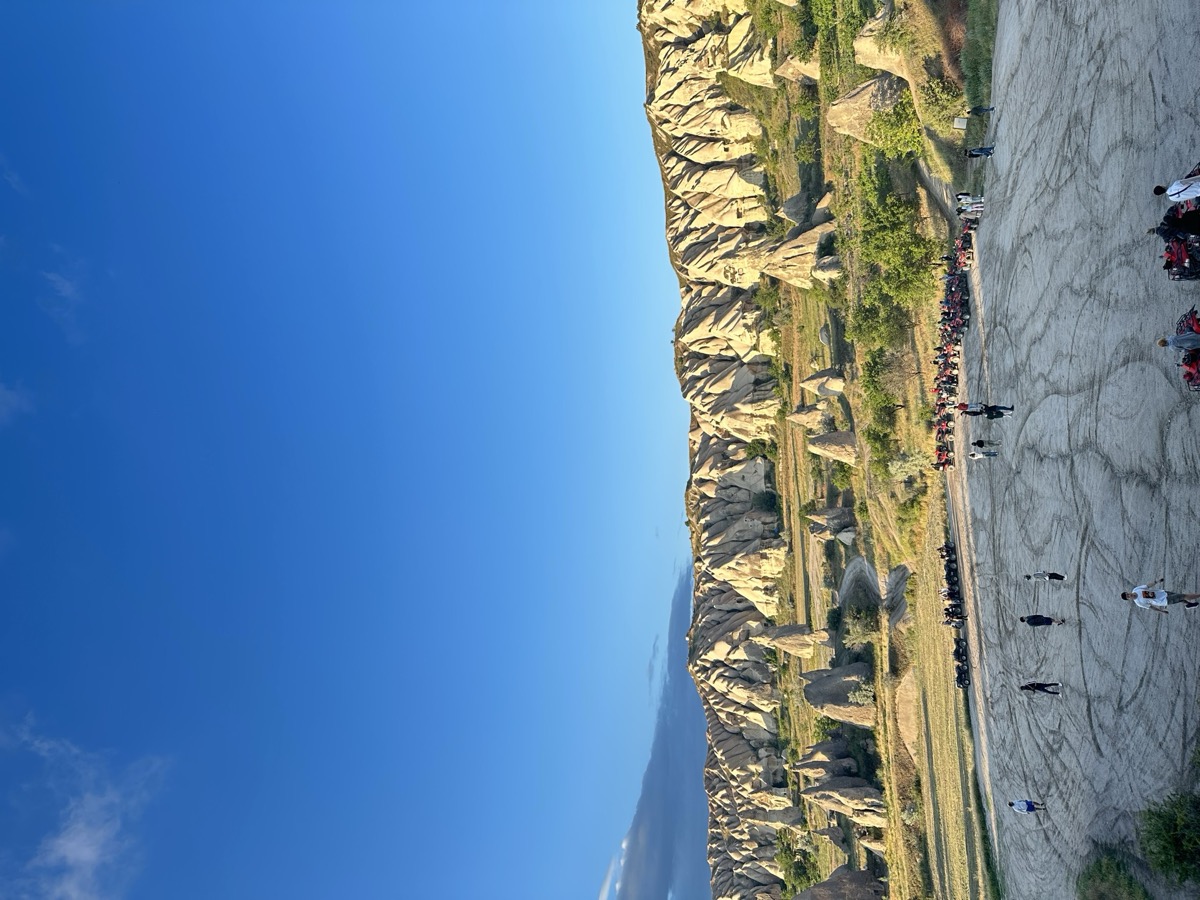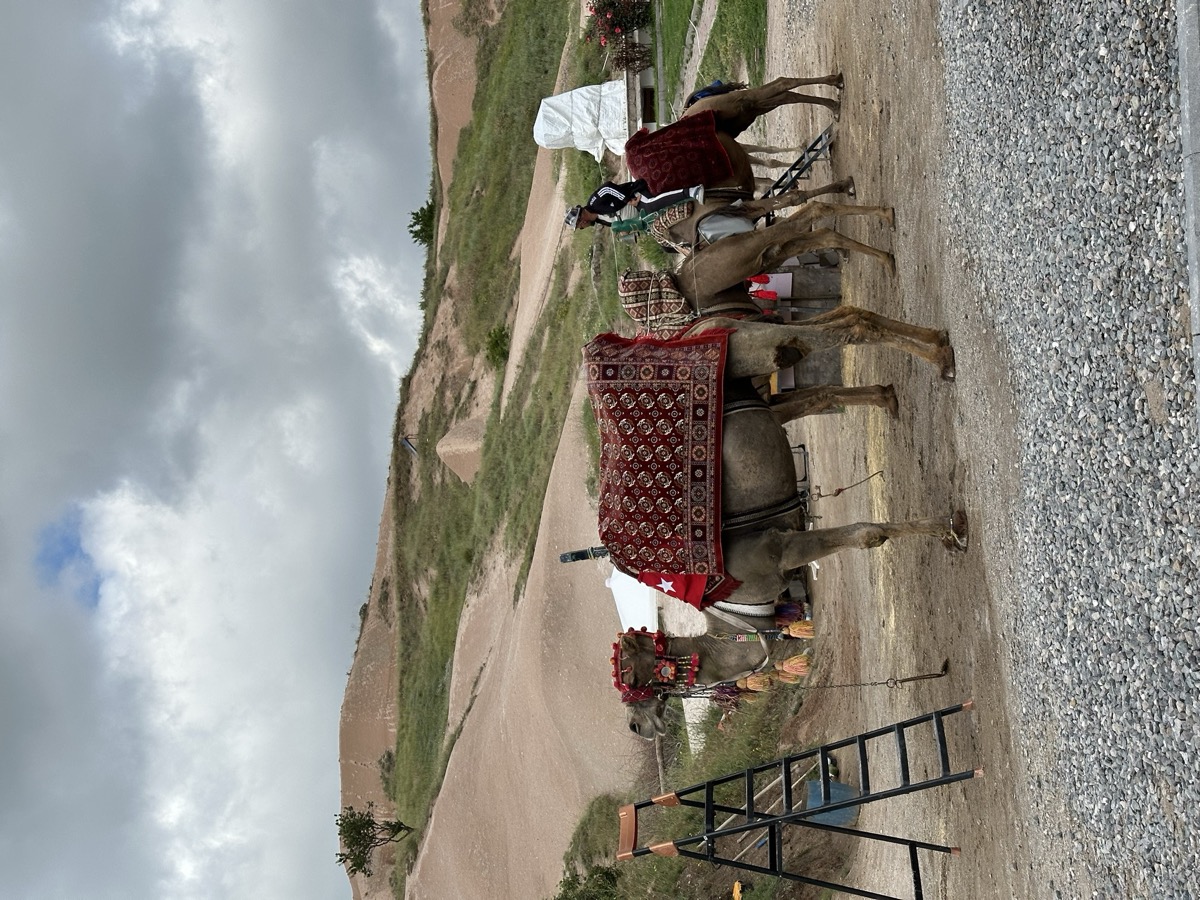For dinner, we hit **Göreme Han Restaurant**. About $25 for two people with solid Turkish food. Nothing revolutionary, but good portions and a nice atmosphere after a dusty ATV ride.### Day 2: Hot Air Balloon + Green Tour**4:40am pickup.** Yes, it sucks. No, you can't skip it if you want to catch the sunrise.The hot air balloon is the thing everyone comes to Cappadocia for, and honestly, it lives up to the hype. I went with Brother Balloons and paid €480 for two people (roughly $260/person). My advice: book directly with a reputable company rather than through random tour agencies that'll upcharge you for the same experience.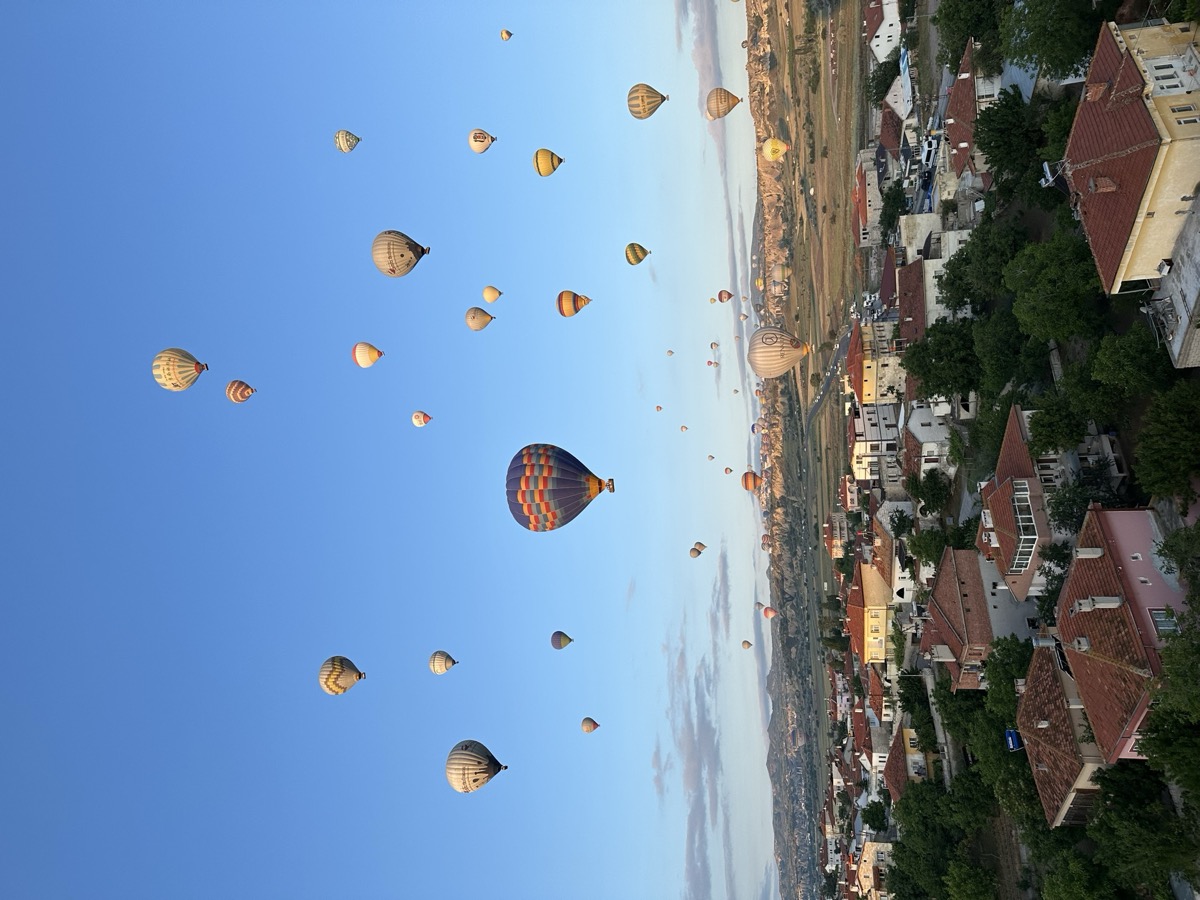After landing, you'll have time to crash for a bit before the **Green Tour** pickup at 9:30am. I booked through Viator, but the actual operator was Hereke Travel. They're solid and I ended up using them again.The Green Tour covers:- Göreme Panorama viewpoint - Pigeon Valley - Kaymakli Underground City (this is wild, we're talking an entire city carved underground) - Selime Monastery - Ihlara Valley, a 3km hike through a canyon dotted with rock-cut churchesFor dinner, we tried **CanCan Restaurant**, and here's a pro tip: only order one main dish. They bury you in free appetizers like bread, dips, and salads. We made the mistake of over-ordering and couldn't finish half of it.### Day 3: Red Tour + Transfer to IstanbulBack with Hereke Travel for the **Red Tour**, pickup again at 9:30am.The Red Tour hits:- Uçhisar Castle - Love Valley - Göreme Open Air Museum (a UNESCO site with rock-cut churches and frescoes) - Avanos pottery demonstration - Devrent Valley (aka Imagination Valley, where rocks look like camels, seals, you name it) - Paşabağ fairy chimneysOne thing worth paying for: the extra 100 lira to see the Dark Church inside the Open Air Museum. The frescoes are incredibly well-preserved, and since most tourists skip it, you actually get some breathing room inside.For our last dinner in Cappadocia, we tried a Turkish ravioli (mantı) place. Tasty, but heads up: no non-beef options if that matters to you. We grabbed coffee at Viewpoint Restaurant and Cafe afterward for one last look at the landscape.We arranged our airport transfer through the hotel with Göreme Transfers. 260 lira per person for a smooth ride to the airport, then flew to Istanbul.---## Istanbul (Days 4-6)### Day 4: Old City + Bosphorus CruiseFirst order of business: **get yourself an IstanbulKart**. It's 50 lira at any metro station and works on trams, metro, ferries, and buses. Basically everything. One card can be used for multiple people (just tap it multiple times), and topping up at any station takes seconds. Also, download the **Yandex Metro app**. It'll save you from staring at confusing transit maps.I joined a [walking tour through Airbnb Experiences](https://www.airbnb.com/experiences/2167606) that hit all the essentials:- Hippodrome - Basilica Cistern (an extra 350 lira per person, but worth it if you're into history. The atmosphere down there is unreal)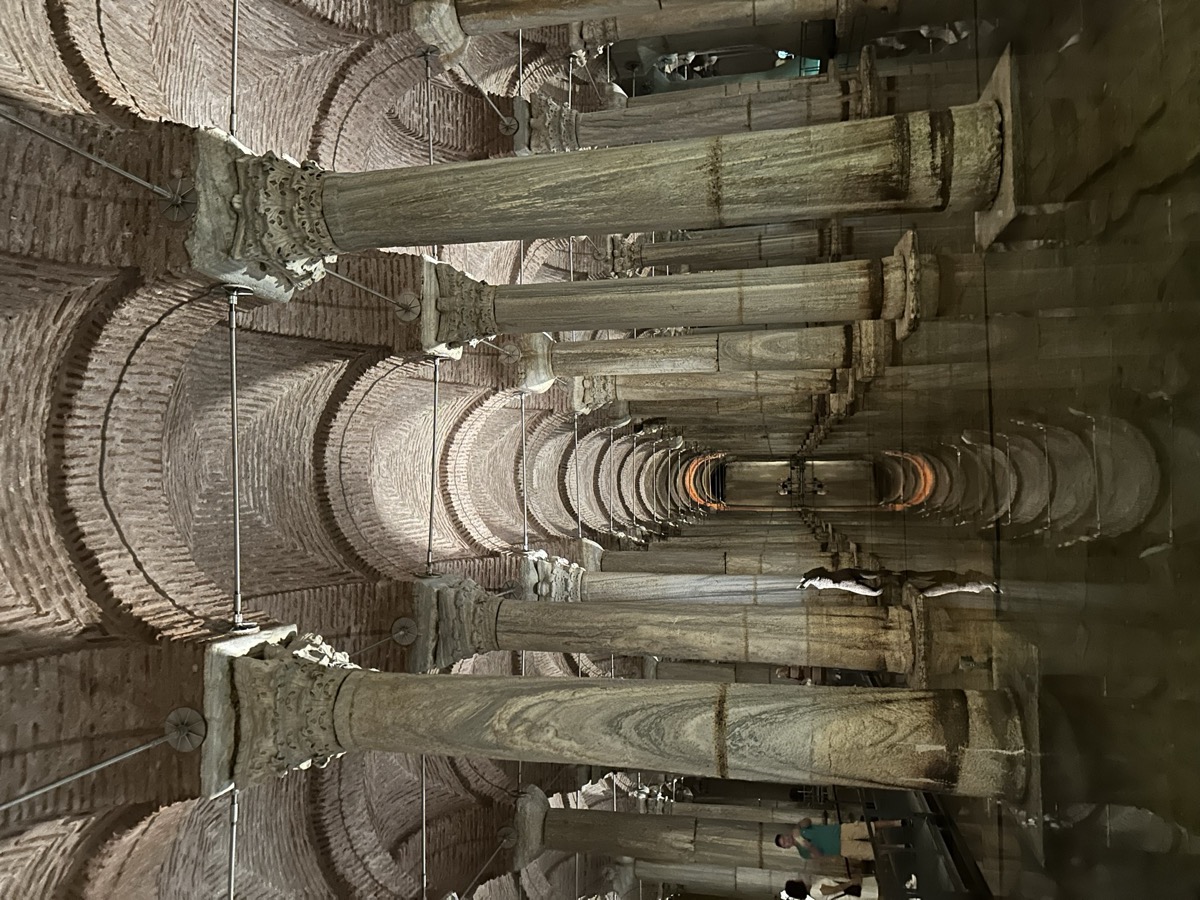- Grand Bazaar (more on this later) - Hagia Sophia - Blue Mosque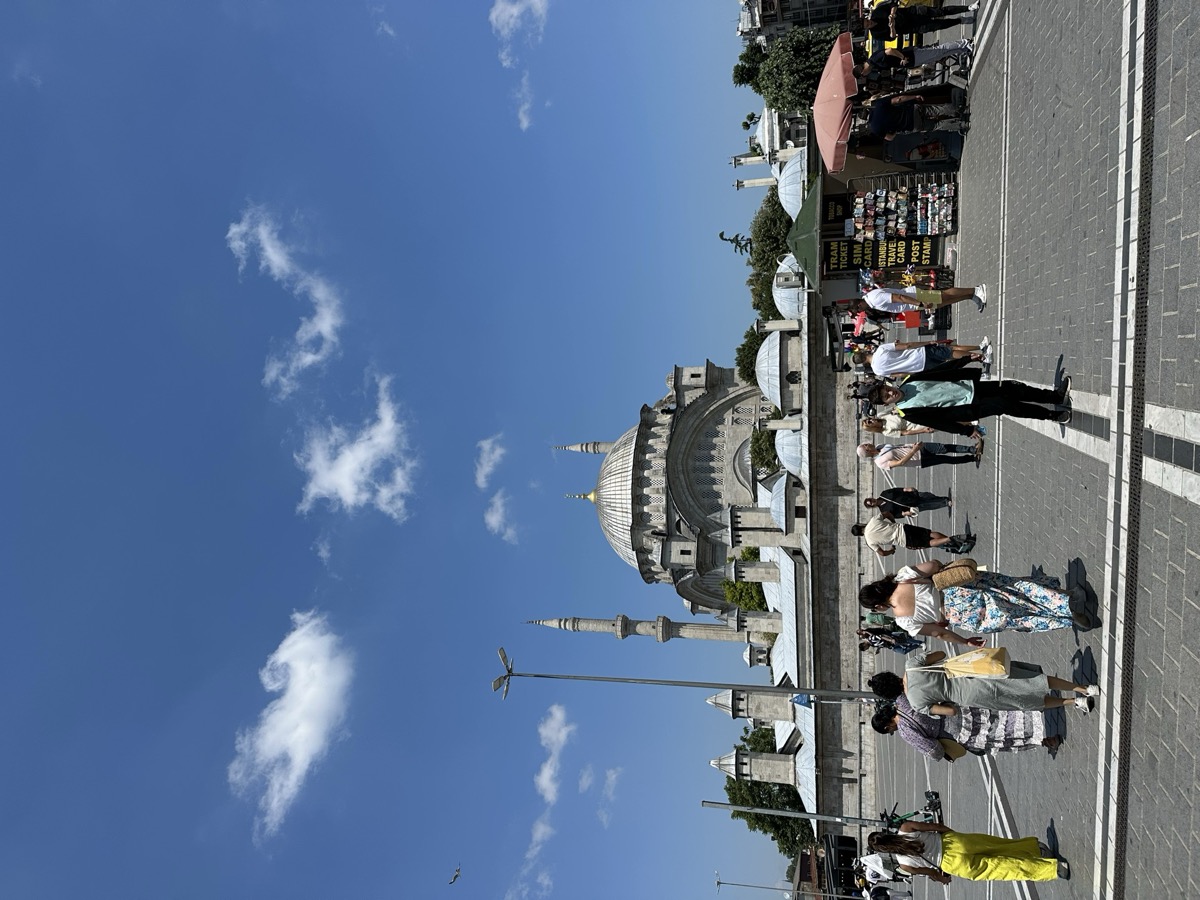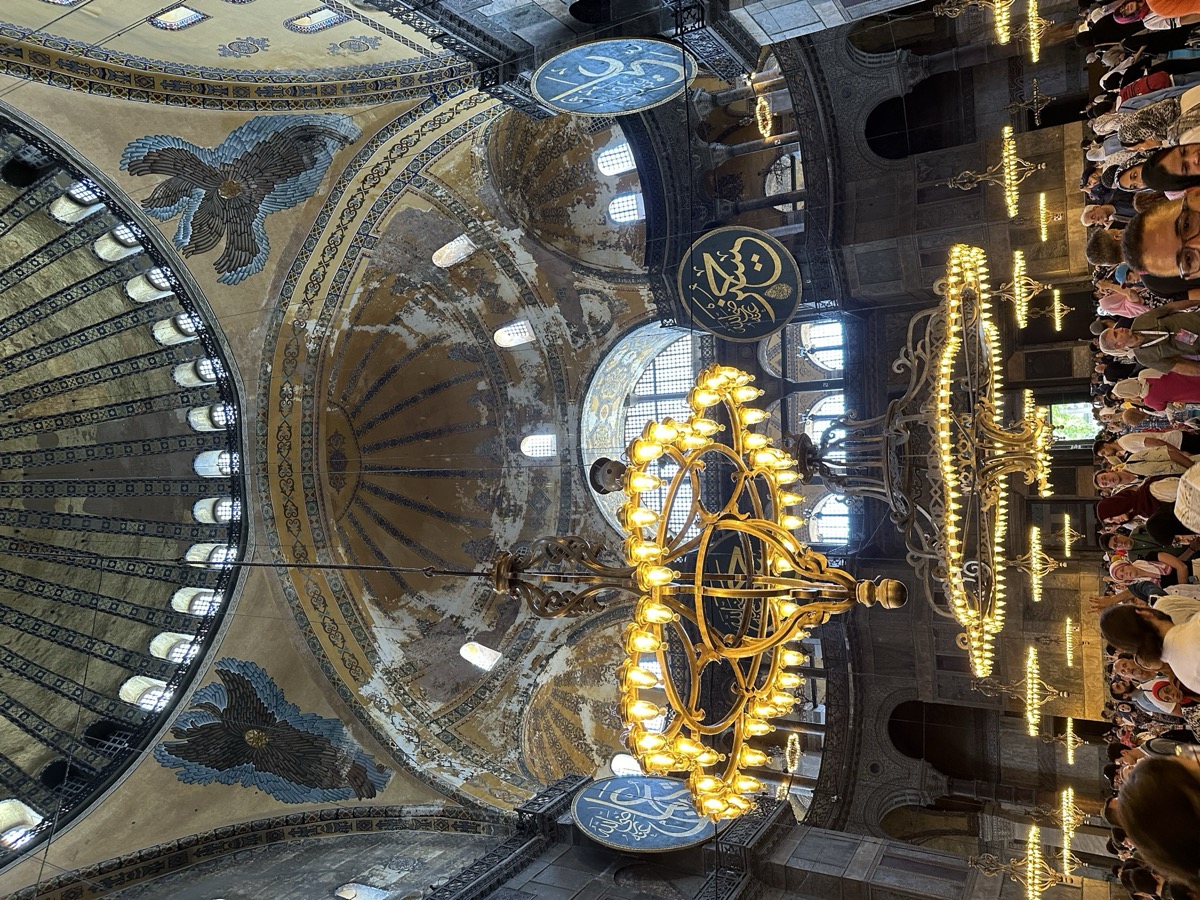**A note on the mosques:** there's a dress code. Shoulders and knees need to be covered, and women need head coverings. Men, wear pants or at least shorts that cover the knees. If you forget, they sell scarves and coverups right outside, but you'll pay tourist prices. Better to bring your own.For lunch, I grabbed a lamb pide (basically Turkish flatbread pizza) at some restaurant I can't remember the name of, but it was fantastic. Honestly, pide is a safe bet pretty much anywhere in Istanbul.That evening, I did a [Bosphorus sunset cruise](https://www.airbnb.com/experiences/1590116) booked through Airbnb, and this ended up being one of the highlights of the trip. You meet at the pier, cruise around the strait for a couple hours, and they provide free drinks and finger food. The views are unreal. Watching the sun set over the Istanbul skyline from the water, with mosques and minarets silhouetted against the sky, is something else entirely. It's a nice, low-effort way to end a long day of walking, and I'd do it again in a heartbeat.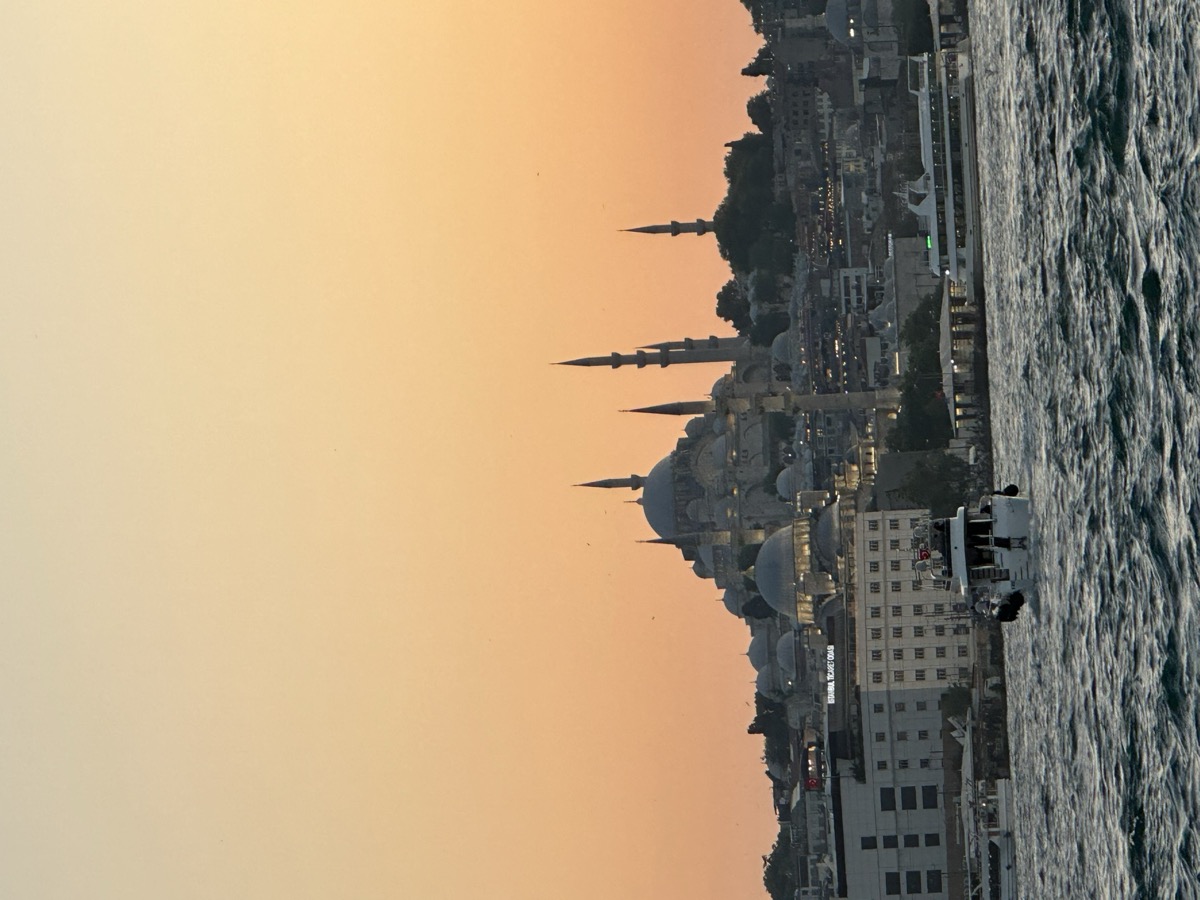### Day 5: Asian Side + Grand Bazaar + NightlifeIn the morning, I took the ferry to Kadıköy (the Asian side of Istanbul) from Karaköy pier. 19 lira per person for about a 40-minute ride. Walked around the neighborhood, found a Friends-themed cafe with great Shalep (a hot Turkish drink worth trying), and wandered over to Moda Sahili park.**My honest take:** Kadıköy is fine, but it's not essential. If you're tight on time, skip it and spend more time in the Old City. The fish sandwich at the fish market was mid at best.The afternoon was all about **Grand Bazaar shopping**. One important note: **it's closed on Sundays**, so plan accordingly.Here's what I paid:- Turkish delight: 500 lira per kg - Baklava: 570 lira per half kg - Random trinkets: haggle hard, start at 50% of the asking price and work from thereThe bazaar is absolutely massive and you will get lost. That's fine. Just embrace it and wander. You'll stumble into interesting corners you wouldn't have found otherwise.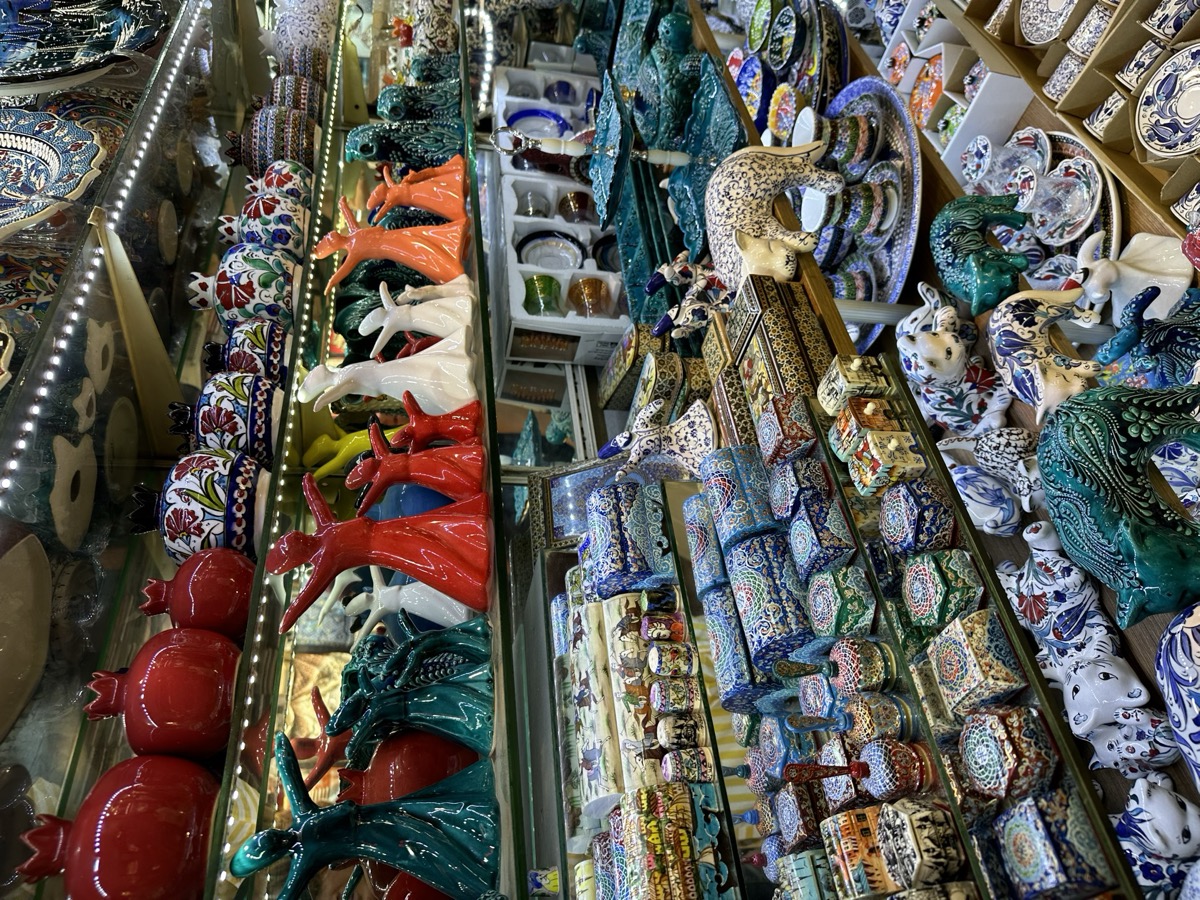I also popped into **St. Anthony of Padua Basilica** nearby, which is worth a quick visit if you're into architecture.For nightlife, I did the [party bus tour](https://www.airbnb.com/experiences/3706544) (also marketed as the Istanbul Pub Crawl on Airbnb). It starts at a bar in Sultanahmet with drinking games, then a party bus shuttles you to clubs in Taksim Square. You get one free shot at each club; other drinks are on you. Free entry everywhere, well organized, and I met some cool people. Solid option if you want to go out but don't know where to start.### Day 6: Topkapı Palace + Princes' IslandsStarted the morning at **Topkapı Palace**. The combined ticket including the Harem runs 650 lira per person.**Pro tip:** Get there by 10:30am and you won't need a "skip the line" ticket. The crowds build up later in the day.What to prioritize inside:- The Holy Relics section in Courtyard 3 (yes, really. It's more interesting than it sounds) - The Harem (save this for last since it's a separate section) - The views of the Bosphorus from the terracesIn the afternoon, I took the ferry from Kabataş to the Princes' Islands.**Learn from my mistake:** Look up ferry times BEFORE you go. We showed up at Eminönü first only to discover there was no Sunday ferry, then waited an extra hour at Kabataş because we hadn't checked the schedule. Don't be us.I went to **Büyükada**, the largest of the islands. No cars are allowed, so you get around by bike or on foot.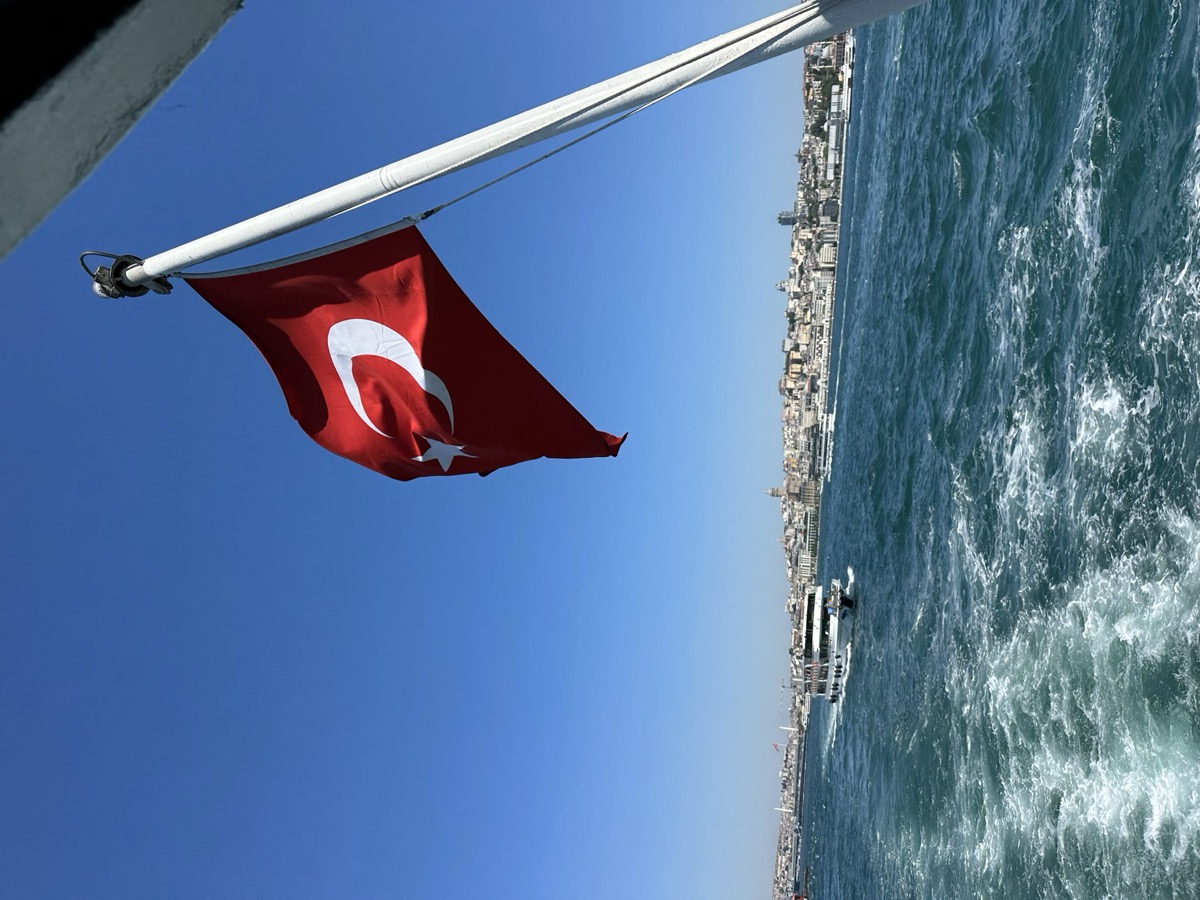- Bike rental runs about 50 lira per person per hour - Fair warning: the island loop isn't easy. Expect hills and unpaved sections, so prepare to work for it - Dilburnu Park has a 21 lira entrance fee but it's a great spot to rest and grab some photos - There's a monastery at the top of an incline hill. The climb is worth it for the rooftop terrace restaurant with incredible views**Another tip:** If you arrive early enough, grab an all-day pass at one of the beach clubs. Umbrella, drinks, wifi, the whole package for about 350 lira per person. We got there too late and missed out.I caught the 8:35pm ferry back to Kabataş. Heads up: the return trip takes about 2 hours since it stops at all the islands along the way.For a late dinner, **Karadeniz Pide Salonu** is open 24 hours. More pide. Zero regrets.---## Frequently Asked Questions### How much does a hot air balloon ride cost in Cappadocia?Expect to pay €200-250 per person with a reputable company. I used Brother Balloons and had a great experience. Book directly with the balloon company rather than through a middleman tour agency.### Is the Green Tour or Red Tour better in Cappadocia?Honestly, both are worth doing if you have time. The Green Tour has the underground cities and the Ihlara Valley hike, making it more adventure-focused. The Red Tour covers the fairy chimneys and the Open Air Museum, making it more sightseeing-oriented. If you can only pick one, I'd lean toward Green, but ideally do both.### How do I get around Istanbul?IstanbulKart is your best friend. 50 lira gets you a card that works on all public transit, and one card works for multiple people. Top it up at any metro station. The tram and metro system is genuinely solid and covers most tourist areas.### Is Kadıköy worth visiting?If you have 3+ days in Istanbul, sure, it's a nice change of pace. But if you only have 2 days, skip it and prioritize Topkapı Palace, the Grand Bazaar, and the Princes' Islands instead.### Should I do the Istanbul pub crawl?If you want to party and meet other travelers, absolutely. It's well organized, you get free club entry, and there's usually a good mix of people. If drinking games and club music aren't your thing, skip it.### What should I know about dress codes at mosques?Hagia Sophia and the Blue Mosque both require covered shoulders and knees. Women need head coverings, and men should wear pants or at least shorts that cover the knees. They sell scarves and coverups outside if you forget, but prices are inflated. Bring your own if you can.### How do I get from Cappadocia to Istanbul?Fly. Seriously. It's a 10+ hour drive or bus ride otherwise. Flights are cheap and take about an hour. You'll fly out of either Nevşehir or Kayseri airport near Göreme. Arrange the transfer through your hotel.### How much should I budget per day in Turkey?For a mid-range trip like mine, budget around $100-150 per day for two people. That covers a decent hotel, tours, meals at sit-down restaurants, and attractions. You can do it cheaper if you stay in hostels and eat street food, or spend more if you want luxury cave hotels.### Is Turkey expensive for tourists?Not compared to Western Europe. Meals are $10-25 for two, transit is dirt cheap, and even "expensive" attractions like Topkapı Palace are under $20. The main splurge is the hot air balloon, but even that is cheaper than similar experiences elsewhere.### Is the Cappadocia hot air balloon worth it?Yes. It's expensive at €200-250 per person, but floating over those fairy chimneys at sunrise is genuinely one of the most surreal experiences I've had traveling. If you can afford it, do it. Just book directly with a reputable company.### How much does food cost in Turkey?A pide (Turkish flatbread pizza) runs about $5-8. A full dinner for two at a decent restaurant is $20-30. Street food like simit (sesame bread) or dürüm (wraps) cost $2-4. Turkish breakfast spreads at cafes are around $8-12 per person and will keep you full until dinner.### Should I use cash or card in Turkey?Both work. Cards are accepted at most restaurants and shops in tourist areas. You'll need cash for smaller vendors, the Grand Bazaar (easier to haggle), and some transit. ATMs are everywhere. Just avoid exchanging money at the airport since the rates are terrible.---## Final ThoughtsTurkey punches way above its weight. You get ancient history, landscapes that look like another planet, and legitimately excellent food, all without Western Europe prices. Five days is tight but absolutely doable if you don't waste time agonizing over where to eat lunch.The hot air balloon is expensive but worth every cent. The underground cities are way cooler than you'd expect. Istanbul's public transit puts most American cities to shame. And Turkish breakfast spreads? Borderline religious experience.Book it.
- Lulu the pug
- March 2, 2026
Tbilisi, Georgia: What It Actually Costs (And Why Everyone Is Going in 2026)
Tbilisi just hit #2 on Tripadvisor's most trending destinations for 2026. The city is cheap, the food is excellent, the wine costs almost nothing, and the old town looks like nothing else in the region.Here's what it actually costs and what's worth your time.## Table of contents## The Short Answer on Cost**Budget traveler:** $30–45/day **Mid-range traveler:** $65–90/dayThat includes accommodation, food, transport, and a glass of wine at dinner. Skipping the wine in Georgia would be a crime.## Getting ThereTbilisi has direct flights from most major European cities: Warsaw, Vienna, Amsterdam, Paris, plus connections from the Middle East and Central Asia. Flights from Western Europe typically run $100–200 return if you book a few weeks out.**From Istanbul:** Short hop, good prices. Flights run $68–125 one-way with AJet and Turkish Airlines. April and February are cheapest.**From neighboring countries overland:** If you're coming from Armenia or Azerbaijan, marshrutkas (shared minibuses) are cheap, frequent, and the practical choice, though the border crossing adds time. From Baku the bus runs $10–15 and takes 9–11 hours.**From the airport into the city:** Two options.| Option | Cost | Time | |---|---|---| | Bus 337 (to Freedom Square) | 1 GEL ($0.37) | ~50 min | | Bolt/Yandex taxi | 25–35 GEL ($9–13) | ~30–40 min |Do not negotiate with the unmetered street taxis outside arrivals. They quote 80–150 GEL for the same ride Bolt does for 30.**Currency note:** 1 Georgian lari (GEL) is about $0.37. Pick up a Metromoney card for 2 GEL on arrival; you'll need it for the metro and buses.## Where to StayStay in Old Tbilisi (Abanotubani and Kala districts). You're walking distance from the sulphur baths, Narikala, the cable car, and the best wine bars. Accommodation here is cheap.| Type | Price per night | |---|---| | Hostel dorm bed | $8–15 | | Guesthouse private room | $30–45 | | Airbnb apartment | $65–100 | | 3-star hotel | $55–75 |The guesthouse private room is the best value. For $35–40 you often get something with a courtyard and a host who'll point you toward the correct khinkali spot.## Food Costs: What You'll Actually SpendGeorgian food is cheap by any European standard and very good. The two dishes you'll eat constantly are **khinkali** (dumplings) and **khachapuri** (cheese bread). Both are inexpensive everywhere; both are worth eating well.**Khinkali** (Georgian dumplings filled with spiced meat or cheese) - Neighborhood local place: 0.8–1.5 GEL each ($0.30–$0.55) - Central tourist area: 2–2.50 GEL each ($0.75–$0.90) - Standard order: 5–10 pieces per person**Quick meal budgets:** | Meal type | Cost | |---|---| | Khachapuri from a bakery | $1–2 | | Budget lunch (local canteen) | $4–7 | | Sit-down dinner for two (with wine) | $22–35 | | High-end restaurant for two | $55–75 |Shardeni Street looks beautiful and charges accordingly. Eat one meal there for the atmosphere, then find a neighborhood dukani for everything else. The food is the same. The price is not.## The Wine SituationGeorgia is one of the oldest wine-producing regions in the world (8,000 years of winemaking). The wine is very good and costs almost nothing.| Where | What | Price | |---|---|---| | Supermarket (Carrefour, Goodwill) | Decent bottle of Saperavi | 25–50 GEL ($9–18) | | Neighborhood wine bar | Glass of house wine | 6–12 GEL ($2–4.50) | | Upscale wine bar | Glass | 10–20 GEL ($3.60–7) |The amber wines (skin-contact whites made in traditional clay qvevri vessels) are the regional speciality. If you've never had one, Tbilisi is the place. Ask for Rkatsiteli or Tsolikouri. Even the cheap pours are worth trying.The wine bars on Rustaveli Avenue charge 30–50% more for the same pours. Skip them.## Getting Around the CityThe metro covers most places you'll want to go and costs 1 GEL per ride. For everything else, use Bolt. Cheap, reliable, no haggling with street taxis.| Transport | Cost | |---|---| | Metro (per ride) | 1 GEL ($0.37) | | Cable car (Rike Park to Narikala) | 2.50 GEL ($0.90) | | Funicular (to Mtatsminda) | 2.50 GEL ($0.90) | | Bolt taxi (typical city ride) | 7–15 GEL ($2.50–$5.50) |## A 3-Day Tbilisi Itinerary### Day 1: Old Town + Sulphur BathsWalk Old Tbilisi (Kala district) in the morning. The carved wooden balconies, the winding streets, the general dilapidation. The crumbling bits are part of the point.Afternoon: **Abanotubani** (the sulphur bath district). The natural hot springs here have been running since the 5th century. Go for a private room rather than the shared public baths. Prices have risen, so check which bathhouse fits your budget before you show up.The budget option is **Bathhouse No. 5** (one of the oldest, since the 1920s): private rooms run 70–110 GEL/hour, public shared bath for 6–10 GEL. If you want something nicer, **Gulo's Thermal Spa** runs 150–300 GEL/hour. The famous **Chreli-Abano** (the one with the mosaic facade) is the luxury end at 130–200+ GEL/hour. Worth it for the architecture alone, but book ahead.Evening: walk the **Bridge of Peace** at sunset. Free, ten minutes, good view back over Old Town.**Day 1 costs:** | Item | Cost | |---|---| | Sulphur bath (shared public) | 6–10 GEL per person | | Sulphur bath private room, budget (No. 5) | 70–110 GEL/hour for the room | | Sulphur bath private room, mid-range (Gulo's) | 150–300 GEL/hour for the room | | Dinner + wine at a local dukani | 25–35 GEL per person | | Transport | 5–8 GEL |### Day 2: Narikala + Mtatsminda + Dry Bridge MarketTake the **cable car up to Narikala Fortress** for the views over the city (2.50 GEL each way). The fortress is free to walk through. The **Mother of Georgia statue** is a short uphill walk from there and worth doing once for the vantage point.Come back down, grab khinkali somewhere cheap for lunch, then head to the **Dry Bridge Flea Market** (open daily, best on weekends). It's a great sprawl of Soviet memorabilia, art, and antiques. Budget some money if you want to buy anything; budget your time if you want to look at everything.Evening: take the **funicular up to Mtatsminda Park**. The amusement park at the top is tired, but the view of Tbilisi at night is the best you'll get.**Day 2 costs:** | Item | Cost | |---|---| | Cable car (return) | 5 GEL | | Funicular (return) | 5 GEL | | Khinkali lunch (8 pieces) | 8–12 GEL | | Dry Bridge Market (if you buy anything) | variable |### Day 3: Sameba Cathedral + Wine + Wandering**Sameba Cathedral** (Holy Trinity Cathedral) is the largest Orthodox church in the Caucasus. Free entry and worth seeing just for the scale.From there, spend the afternoon at a proper **wine bar**, somewhere like Vino Underground or Wine Factory No. 1, and work through a few glasses of amber wine. Order the qvevri Rkatsiteli if it's on. That's what you came for.Dinner somewhere in Old Town. Get a terrace if the weather holds.## What I'd Do Again (And What I'd Skip)**Do again:** - Sulphur bath private room (the public ones are fine but the private room is worth splitting) - Cable car up to Narikala (the walk back down through Old Town is the best part) - Amber wine at a neighborhood wine bar, not a tourist-facing one - Dry Bridge Market on a weekend**Could skip:** - Mtatsminda Park itself (the funicular ride is the point; the amusement park is tired) - Any restaurant on Shardeni Street (they're fine, but you're paying for the street)## VisaMost Western passport holders (USA, UK, EU, Canada, Australia, and many more) enter Georgia visa-free for up to one year. EU citizens can use a national ID card rather than a passport. China gets 30 days, Iran gets 45 days.Check the current list at evisa.gov.ge before you travel. Georgia's visa policy has expanded a lot in recent years but it does change. If your country requires one, the e-visa costs approximately $23–65 and processes online within about five business days.## Best Time to Go**Go in:** May, June, September, October. May is ideal: 20–25°C, no crowds yet, everything open. Late September–October coincides with the **Rtveli harvest festival**, when winemakers across the country bring in grapes and open their doors. Worth timing a trip around if you can.**Avoid:** July and August. The city gets up to 35–40°C. Hot, humid, expensive, and crowded.## The Main Scam to Know AboutThe bar hustle. A friendly local (often attractive, always persuasive) invites you into a bar you've never heard of. You have a few drinks. The bill arrives itemized with things you didn't order and numbers that don't add up. It still happens, mostly near Rustaveli Avenue and in Old Town after dark.Rule: if a stranger invites you to a venue that doesn't appear on Google Maps, don't go. Verify the place exists before you walk in.Street taxis at the airport: already covered above. Use Bolt.## FAQ: Tbilisi Basics**Is Tbilisi actually cheap?** Yes. A full dinner with wine and starters costs what a single main course runs in Western Europe.**Is it safe?** Generally yes. Violent crime against tourists is uncommon. The bar scam is the main tourist-targeting issue. Pickpocketing happens on the metro and at the Dry Bridge Market but isn't rampant. One real thing to watch: Georgian drivers don't yield to pedestrians.**Is English spoken?** Younger Georgians and anyone in the hospitality industry: yes. Older locals: usually not. You'll get by fine either way.**Do you need cash?** Mostly, yes. Card acceptance is improving but inconsistent outside hotels and larger restaurants. Withdraw GEL from ATMs inside bank branches rather than standalone street machines.**Is 3 days in Tbilisi enough?** Enough to see the main things and eat well. Four days lets you do a day trip. Mtskheta (the ancient capital, 30 minutes away) is the easy option.**Can you combine it with other countries in the region?** Georgia sits between Armenia and Azerbaijan; overland crossings are easy. If you're also doing [Baku](/blog/azerbaijan-baku-3-day-itinerary-costs/), the marshrutka between the two cities costs $10–15 and runs overnight.---
- Lulu the pug
- January 7, 2025
Istanbul on a Budget: What Everything Actually Costs
Istanbul has a reputation for being cheap, but is it actually? I spent 3 days there in 2023 and tracked what I spent. Here's the real breakdown.## The Bottom Line**Daily budget for Istanbul (per person):**| Travel Style | Per Day | | --------------------------------------------------- | -------- | | Budget (hostels, street food, free attractions) | $30-50 | | Mid-range (hotels, restaurants, major sites) | $60-100 | | Comfortable (nice hotels, tours, no penny-pinching) | $100-150 |I traveled mid-range to comfortable and spent about $70-80 per day including everything except accommodation.## Getting AroundIstanbul's public transit is excellent and cheap. The key is the **IstanbulKart**.| Transport | Cost | | -------------------------------------- | ----------------------------- | | IstanbulKart (reloadable transit card) | 50 lira (~$1.50) for the card | | Single tram/metro ride | ~17 lira (~$0.50) | | Ferry ride (Bosphorus crossing) | ~17 lira (~$0.50) | | Airport bus (Havaist) | ~140 lira (~$4) | | Taxi from airport to Sultanahmet | ~400-500 lira (~$12-15) |**Pro tip:** One IstanbulKart works for multiple people. Just tap it multiple times at the turnstile. Load it up at any metro station.The tram, metro, and ferry system covers basically everywhere tourists want to go. I only took one taxi the entire trip and immediately regretted it (traffic was brutal and the metro would have been faster).## Food and DrinkThis is where Istanbul shines. You can eat incredibly well for very little.| Food | Cost | | --------------------------------- | ----------------------- | | Simit (sesame bread ring) | 10-15 lira (~$0.40) | | Döner/kebab wrap | 80-120 lira (~$3-4) | | Pide (Turkish pizza) | 150-250 lira (~$5-8) | | Full meal at local restaurant | 200-400 lira (~$6-12) | | Dinner for two at nice restaurant | 800-1200 lira (~$25-35) | | Turkish tea | 20-30 lira (~$0.75) | | Turkish coffee | 60-100 lira (~$2-3) | | Beer at a bar | 100-180 lira (~$3-5) | | Bottled water | 10-20 lira (~$0.40) |**Where to save money:**- Eat where locals eat, not on the main tourist streets - Get breakfast at a simit cart instead of a cafe - Drink tea instead of coffee (it's cheaper and they refill it) - Fill up on the free bread and appetizers at restaurants**Where it's worth spending:**- A proper Turkish breakfast spread (it's an experience) - Baklava from a good shop - Fresh fish by the Bosphorus## Attractions and Entrance FeesThis is where Istanbul can add up if you're not careful.| Attraction | Cost | | ------------------------ | ------------------------ | | Hagia Sophia | Free (it's a mosque now) | | Blue Mosque | Free | | Topkapı Palace | 650 lira (~$20) | | Topkapı Palace + Harem | 950 lira (~$29) | | Basilica Cistern | 450 lira (~$14) | | Dolmabahçe Palace | 650 lira (~$20) | | Galata Tower | 650 lira (~$20) | | Grand Bazaar | Free to enter | | Bosphorus ferry (public) | 17 lira (~$0.50) | | Bosphorus tour boat | 200-400 lira (~$6-12) |**Money-saving tips:**1. **Hagia Sophia and Blue Mosque are free.** They're also two of the most impressive things in the city.2. **Take the public ferry instead of a tour boat.** The commuter ferry from Karaköy to Kadıköy or from Eminönü to Üsküdar gives you Bosphorus views for $0.50 instead of $10+.3. **Skip Galata Tower.** The rooftop bars nearby have similar views and you can spend the entrance fee on drinks instead.4. **Topkapı is worth full price.** Get the combined ticket with the Harem. Give yourself 3-4 hours.5. **The Basilica Cistern is cool but quick.** 30 minutes max. Decide if $14 for half an hour is worth it to you (I thought so).## AccommodationPrices vary wildly by neighborhood and season.| Type | Per Night | | ----------------------------- | --------- | | Hostel dorm | $15-25 | | Budget hotel | $40-60 | | Mid-range hotel (Sultanahmet) | $70-120 | | Nice hotel | $120-200+ |**Best areas to stay on a budget:**- **Sultanahmet:** Touristy but walkable to everything. Prices are higher but you save on transport. - **Karaköy/Galata:** More local vibe, good food scene, easy tram access. - **Kadıköy (Asian side):** Cheapest option, but you'll spend more time on ferries.I'd avoid staying too far out just to save $20/night. The time and hassle cost more than the savings.## What I Actually Spent (3 Days)Here's my real spending for 3 days in Istanbul, traveling mid-range:| Category | Total (2 people) | | ---------------------------------- | ---------------- | | Accommodation (3 nights) | $240 | | Food and drinks | $180 | | Transport (IstanbulKart + ferries) | $25 | | Attractions | $90 | | Walking tour | $40 | | Bosphorus cruise | $60 | | Shopping (Grand Bazaar) | $80 | | **Total** | **$715** |That's about **$120/day for two people** or **$60/person/day**, and we weren't being particularly cheap. We ate at sit-down restaurants, did paid attractions, and took a tour.## Hidden Costs to Watch For**Tourist trap restaurants:** The places with guys outside aggressively inviting you in are almost always overpriced with mediocre food. Walk one street back from the main tourist areas.**Taxi scams:** Some drivers "forget" to turn on the meter or take long routes. Use the BiTaksi app or agree on a price beforehand. Better yet, just use public transit.**Grand Bazaar markups:** The first price is never the real price. Start at 50% and negotiate from there. If they won't budge, walk away and they'll often call you back.**Airport exchange rates:** Terrible. Use ATMs or exchange money in the city.**Tipping:** Not mandatory but appreciated. Round up at restaurants or leave 5-10%. For tours, $5-10 per person is standard.## Is Istanbul Cheap?Compared to Western Europe? Absolutely. Compared to Southeast Asia? Not quite.Istanbul sits in that sweet spot where you can travel comfortably without spending a fortune. The food is cheap and excellent, transit is basically free, and the major attractions are reasonably priced.Where it adds up is if you do every museum, take taxis everywhere, and eat only at tourist restaurants. But if you're smart about it, you can have an incredible time for $50-80 per day including accommodation.The biggest value in Istanbul isn't even the low prices. It's that the cheap options (street food, public ferries, free mosques) are often better experiences than the expensive ones.